Pet ownership brings joy, companionship… and a steady supply of waste that most people simply bag and throw in the bin. In New Zealand alone, thousands of tons of pet waste end up in landfill every year.
Like many pet owners, I’ve experimented with different ways of dealing with dog waste over the years. This guide brings together that experience along with research into modern composting methods designed specifically for pet waste.
The problem is that landfill isn’t designed to safely process organic waste like dog poop. When sealed under layers of rubbish, it breaks down without oxygen and releases methane, a greenhouse gas far more potent than carbon dioxide.
The good news? There is a cleaner way to deal with it.
Bokashi composting allows pet owners to safely process dog waste using beneficial microbes and fermentation. Instead of sending waste to landfill, it can be broken down and returned to the soil in a controlled way.
In this guide, you’ll learn how pet waste bokashi works, how to do it safely at home, and what to consider before starting.
What Is Pet Waste Bokashi Composting?
Pet waste bokashi composting uses fermentation to break down dog or cat waste in an airtight container with beneficial microbes. Instead of traditional decomposition, the waste ferments, reducing odours and suppressing pathogens. The fermented material is then buried in soil where it safely finishes breaking down.
Unlike traditional compost piles, bokashi systems work without oxygen. Microorganisms in bokashi bran ferment the organic matter rather than allowing it to rot.
Key points to understand:
• Bokashi uses anaerobic fermentation rather than aerobic composting
• Microbes help suppress odours and speed up breakdown
• The process prepares waste for safe soil decomposition
This method has become popular with eco-conscious households because it is compact, contained, and far less smelly than people expect.
Why Compost Dog Waste Instead of Sending It to Landfill?
Dog waste might seem harmless, but sending it to landfill creates several environmental issues.
When organic material breaks down in landfill without oxygen, it releases methane gas. Methane is a major contributor to climate change and far more potent than carbon dioxide.
Pet waste also contains nutrients that could otherwise return to the soil.
Composting pet waste responsibly can help:
• reduce landfill waste
• prevent methane emissions
• recycle nutrients back into the soil ecosystem
For many pet owners, the real turning point is simply noticing how much waste accumulates every week. One dog can produce hundreds of kilograms of waste each year, most of which ends up in plastic bags in the rubbish bin.
Using a composting system allows that waste to be processed more sustainably.
When I had dogs, I’ll admit my solution wasn’t very sophisticated. Like many pet owners, I would occasionally bury the waste in the garden or bag it and put it in the rubbish. At the time it felt like the easiest option, but over time I realised how much waste that actually created. That’s what led me to start looking into safer composting options like bokashi systems.
How the Bokashi Process Works for Pet Waste
Bokashi composting relies on beneficial microbes to ferment organic material inside a sealed container.
Each time pet waste is added, it is sprinkled with bokashi bran containing microbes such as lactic acid bacteria. These microorganisms quickly begin fermenting the material, creating an acidic environment that suppresses harmful bacteria and reduces smell.
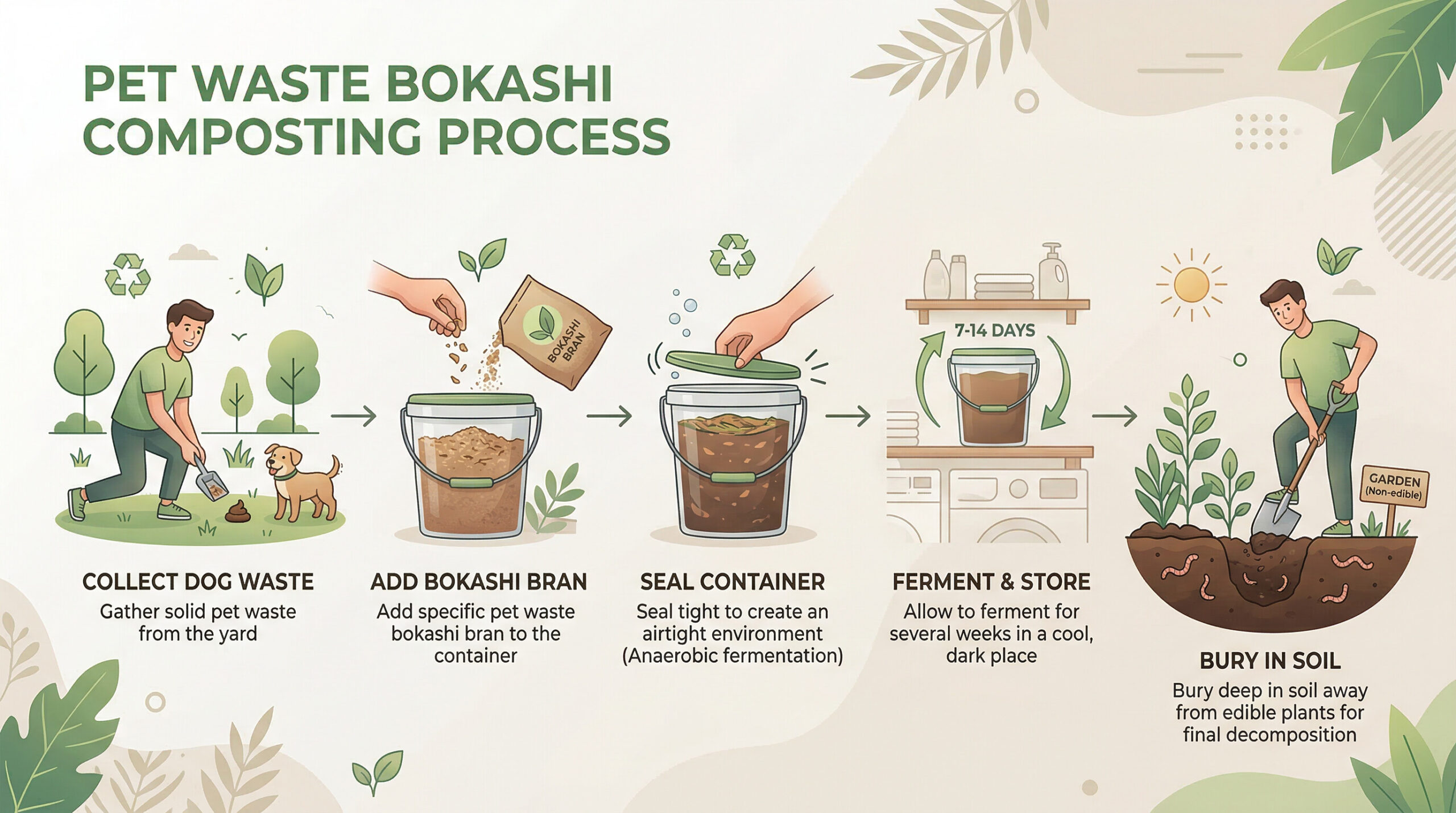
The process usually works like this:
- Pet waste is placed into an airtight bokashi container.
- Bokashi bran is added to introduce beneficial microbes.
- The container remains sealed while fermentation occurs.
- After several weeks, the fermented material is buried in soil.
Once buried, soil microbes complete the decomposition process naturally.
When I first learned about bokashi composting, I was honestly surprised. The idea of fermenting waste in a sealed container sounded unusual at first, but the more I researched it, the more it made sense. Bokashi systems have been used for decades to process organic waste, and adapting that process for pet waste is a clever solution for households that want a cleaner alternative to landfill.
Step-by-Step Guide to Composting Dog Waste with Bokashi
Getting started with pet waste bokashi composting is surprisingly straightforward.
Here is the basic routine most households follow.
Dog waste can be collected during regular yard clean-ups or daily walks. Many people use biodegradable bags when transferring waste to the compost container.
Place the waste into a dedicated airtight bin designed for fermentation
Each layer should be lightly covered with bokashi bran. This introduces the microbes that drive fermentation.
The bin must remain sealed to maintain the anaerobic environment needed for fermentation.
Fermentation usually takes two to four weeks depending on temperature and conditions.
After fermentation, the material should be buried in soil where natural microbes finish the decomposition process.
The buried waste typically breaks down completely within several weeks.
Looking back, if I still had dogs today, I would seriously consider using a dedicated pet waste composting system. The routine is actually simpler than many people expect, and it avoids sending bags of waste to landfill every week. For households trying to reduce their environmental footprint, it’s an option worth exploring.
Is Bokashi Pet Waste Compost Safe for Gardens?
Pet waste requires extra caution compared with normal food scraps.
Even after fermentation, composted pet waste should never be used on edible crops or vegetable gardens. This helps avoid any potential pathogen contamination.
Instead, the material can be safely used around:
• ornamental plants
• trees and shrubs
• lawns
• non-edible garden areas
Bury the material at least 20–30 cm deep and allow adequate time for soil microbes to complete the decomposition process.
When handled correctly, bokashi fermentation combined with soil decomposition creates a safe and responsible way to manage pet waste.
Choosing the Right Pet Waste Bokashi System
While some people experiment with DIY containers, purpose-built systems are usually easier to manage.
A good pet waste bokashi system should include:
• an airtight container
• proper drainage
• a supply of bokashi bran
• durable materials suitable for outdoor use
Using a dedicated system helps maintain the correct fermentation conditions and keeps the process tidy and contained.
If you’re curious about how one of the most popular systems performs, you can read my detailed ENSO Pet Waste Composting Kit Review for New Zealand households, where I explain how the system works and whether it’s worth considering.
Frequently Asked Questions About Pet Waste Bokashi
Can dog poop go in a regular compost bin?
No. Dog waste should not be added to standard backyard compost piles because most home systems do not reach temperatures high enough to kill harmful pathogens. Pet waste should only be processed using specialised systems such as bokashi fermentation or dedicated pet waste composters.
Does bokashi composting kill parasites in pet waste?
Bokashi fermentation helps suppress harmful microbes through beneficial bacteria and acidic conditions. However, it does not completely sterilise pet waste. After fermentation, the material must still be buried in soil and allowed time to fully decompose.
How long does pet waste bokashi take to break down?
The fermentation stage typically takes two to four weeks inside an airtight container. Once buried in soil, the material usually breaks down within another two to six weeks depending on soil conditions and microbial activity.
Can composted dog waste be used in the garden?
Composted dog waste should not be used on vegetable gardens or edible crops due to the risk of harmful pathogens. It is safest to use composted pet waste only around ornamental plants, shrubs, trees, or lawns.
Final Thoughts
Pet waste is something every dog owner has to deal with, but it doesn’t have to end up in landfill.
Bokashi composting offers a practical way to handle dog waste more responsibly while reducing household waste and supporting healthier soil.
For households interested in lowering their environmental footprint, it can be a surprisingly simple addition to a sustainable home routine.