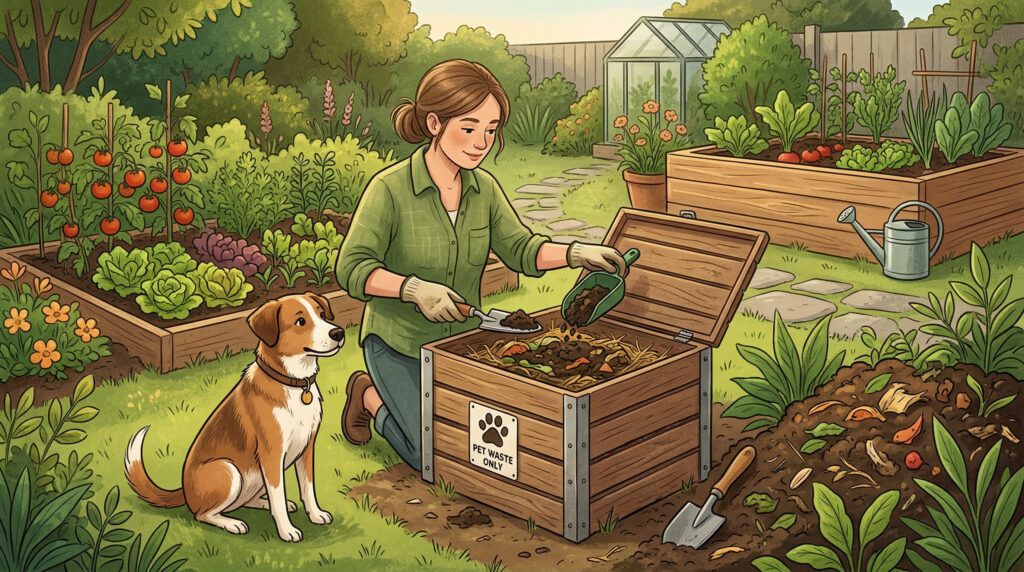
Composting dog waste can feel like a great eco-friendly solution. Instead of sending bags of pet waste to landfill, you’re trying to turn it into something useful.
But many people run into the same problem.
They open their compost system… and the smell hits like a wall.
If your dog poop compost smells awful, don’t panic. A bad odour usually means something in the compost balance is off, not that the whole system has failed.
The good news is that most smell problems are easy to fix once you understand what’s happening inside the compost.
Let’s break down the most common causes and how to fix them quickly.
Why Dog Waste Compost Smells
Healthy compost shouldn’t smell terrible.
A properly balanced compost system usually smells earthy or slightly musty, similar to forest soil.
When strong odours appear, it typically means the compost has become anaerobic, meaning it lacks oxygen.
Without oxygen, different microbes take over the decomposition process. These microbes produce gases that smell like:
- rotten eggs
- ammonia
- sour garbage
Dog waste is especially prone to odor issues because it contains high levels of nitrogen and moisture.
That means the compost system needs careful balance.
1. Too Much Nitrogen
Dog waste is extremely nitrogen rich.
When large amounts are added without enough carbon material, the compost becomes unbalanced and produces ammonia-like smells.
How to fix it
Add carbon-rich materials, often called “browns,” such as:
- shredded cardboard
- dry leaves
- sawdust
- shredded paper
- wood chips
A good compost balance is roughly: 25-30 parts carbon for every 1-part nitrogen
Adding dry carbon materials absorbs moisture and helps microbes work efficiently.
2. Not Enough Air
Compost microbes need oxygen to break down waste properly.
When compost becomes compacted or poorly ventilated, oxygen disappears and anaerobic bacteria start producing foul smells.
How to fix it
Improve airflow by:
- stirring or turning the compost regularly
- avoiding tightly packed waste
- using a compost system with ventilation holes
- adding coarse materials like wood chips to create air pockets
Even a quick stir once or twice a week can dramatically reduce odors.
3. Too Much Moisture
Dog waste already contains a lot of moisture. If the compost system becomes too wet, the oxygen level drops and odours develop quickly.
Signs your compost is too wet include:
- soggy texture
- liquid pooling at the bottom
- strong sour smell
How to fix it
Add dry carbon materials such as:
- shredded newspaper
- dry leaves
- sawdust
These materials absorb moisture and restore balance.
4. Using the Wrong Compost System
Standard backyard compost bins are usually designed for food scraps and garden waste, not pet waste.
Dog waste requires systems that manage:
- higher nitrogen levels
- pathogen risks
- odor control
Dedicated systems like the ENSO Pet Waste Composting Kit use microbial processes to break down pet waste more efficiently while helping control odors.
Pet waste digesters or specialized composting systems are often easier for beginners.
5. Adding Too Much Waste at Once
Small compost systems can easily become overwhelmed.
Adding large amounts of dog waste without balancing materials slows decomposition and creates smell problems.
How to fix it
Instead of adding large amounts at once:
- add waste gradually
- mix in carbon materials each time
- stir the compost regularly
This keeps the microbial ecosystem stable.
A Healthy Dog Waste Compost System Should Smell Mild
When your compost system is balanced, it should smell closer to damp soil than garbage.
Most odour problems come down to three simple factors:
- oxygen
- moisture
- carbon balance
Once those elements are corrected, the smell usually disappears within days.
Composting dog waste successfully takes a little practice, but the environmental benefits can be significant. Pet waste sent to landfill contributes to greenhouse gas emissions and pollution when not handled properly.
You can learn more about the environmental impact of pet waste from the United States Environmental Protection Agency, which explains how pet waste can affect waterways and ecosystems.
Conclusion
A smelly dog waste compost bin doesn’t mean composting has failed. It simply means the system needs adjustment.
By improving airflow, adding carbon materials, and maintaining the right moisture balance, you can turn a smelly compost bin into a healthy decomposition system.
With the right setup, composting dog waste can become a practical way to reduce landfill waste while managing pet waste more sustainably.
Frequently Asked Questions
Why does dog poop compost smell like ammonia?
Ammonia smells occur when there is too much nitrogen and not enough carbon in the compost. Adding dry materials like leaves or shredded cardboard can restore balance.
Is dog poop compost supposed to smell?
Healthy compost should smell earthy or like damp soil. Strong odors usually indicate poor airflow or excessive moisture.
How do I stop my pet waste compost from smelling?
You can reduce odours by adding carbon materials, improving airflow, and avoiding excess moisture in the compost system.
Can I add dog poop to a normal compost bin?
Most backyard compost bins are not designed for pet waste. Dedicated pet waste composters or digesters are usually safer and more effective.