
Every dog owner knows the routine.
Walk the dog. Pick up the waste. Tie the bag. Drop it in the bin.
Repeat. Every day. All year.
Most of us don’t think much about where it goes after that. But when you multiply that daily habit across thousands of households, pet waste becomes a significant environmental issue.
So, the question naturally follows:
Is there a safer, lower-impact way to manage dog waste at home?
This guide breaks down the science, the risks, and the real-world options available in New Zealand, including bokashi-style systems like the YesEnsoPet Waste Composting Kit from ZingBokashi NZ.
The Hidden Environmental Impact of Pet Waste
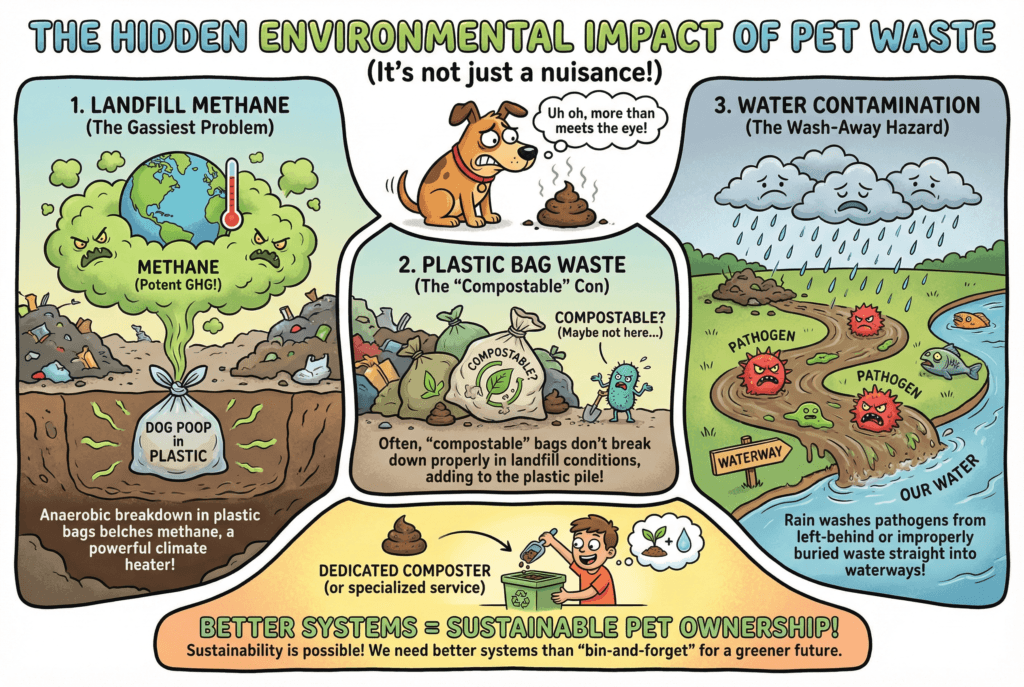
1. Landfill Methane
When dog waste goes to landfill in plastic bags, it breaks down anaerobically and produces methane. Methane is a potent greenhouse gas that contributes to climate change.
2. Plastic Bag Waste
Even compostable bags often end up in landfill conditions where they cannot properly break down.
3. Water Contamination
When pet waste is left on the ground or improperly buried, rain can wash pathogens into waterways.
Pet ownership and sustainability do not have to conflict. But it does require better systems than the standard bin-and-forget method.
Why You Cannot Just Add Dog Waste to Your Regular Compost
This is where many well-meaning eco efforts go wrong.
Dog waste contains:
• E. coli
• Salmonella
• Roundworms
• Parasites
To safely neutralize these pathogens, compost must reach sustained temperatures between 55°C and 65°C. Most backyard compost bins do not consistently reach these levels.
Using untreated dog waste in vegetable gardens can pose real health risks.
That does not mean composting pet waste is impossible. It means it must be done correctly.
Different Ways to Manage Pet Waste Sustainably
There is no one-size-fits-all solution. Here are the main options available.
1. In-Ground Pet Waste Digesters
Systems like the one offered by Doggie Dooley are installed in the soil and use natural enzymes and bacteria to break down waste underground.
Pros
• Low effort once installed
• No landfill
• Suitable for small to medium dogs
Cons
• Requires garden space
• Soil type affects performance
• Not ideal for heavy clay or high-water table areas
2. Bokashi-Style Fermentation Systems
This is where systems like the YesEnsoPet Waste Composting Kit come in.
Unlike traditional composting, bokashi is an anaerobic fermentation process. Special microbes are added to the waste, which ferment it in a sealed container.
After fermentation, the material is buried in soil to complete the breakdown process.
Pros
• Very low odour
• Compact and suitable for urban homes
• Diverts waste from landfill
Cons
• Requires ongoing bran supply
• Final burial step required
• Not suitable for edible gardens
3. Professional Pet Waste Services
Some regions offer commercial composting or specialised collection services. Availability varies across New Zealand.
These can be ideal for people without garden space but are not always accessible or affordable.
How a Bokashi Pet Waste System Works
Let’s look more closely at the process.
Step 1: Collection
Pet waste is placed into a sealed bucket system.
Step 2: Microbial Inoculation
Bokashi bran containing beneficial microbes is sprinkled over each layer.
Step 3: Anaerobic Fermentation
The bucket remains sealed for approximately 2–4 weeks. During this stage, fermentation occurs. Odour is significantly reduced compared to open composting.
Step 4: Soil Burial
The fermented material is buried in ornamental garden soil. Over several weeks, soil microbes complete the decomposition process.
It is important to note that this composted material is generally recommended for ornamental plants, trees, and shrubs rather than vegetable gardens.
Is Bokashi Pet Waste Composting Safe?
Safety depends on correct use.
Fermentation helps suppress harmful bacteria and pathogens, but it does not magically sterilise waste. The soil burial stage is critical for full breakdown.
Best practice recommendations include:
• Do not use near edible crops
• Keep away from root vegetables
• Allow adequate soil rest time
• Follow manufacturer instructions carefully
When done correctly, this method can significantly reduce landfill waste while managing health risks responsibly.
Step-by-Step Guide to Using a Pet Waste Bokashi System
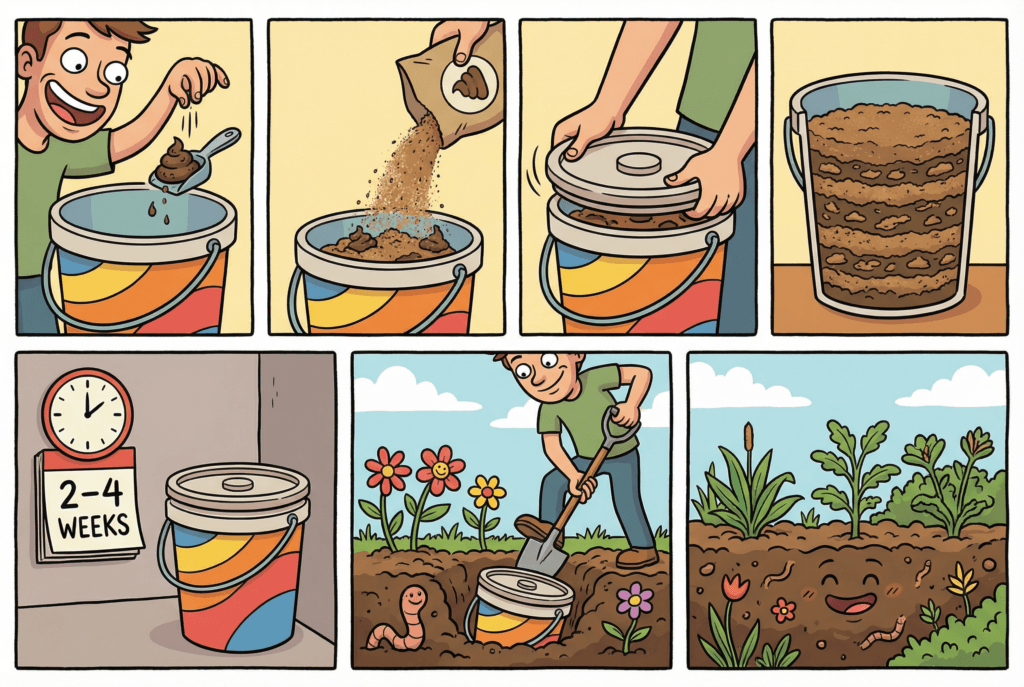
- Place pet waste in the bucket.
- Sprinkle a generous layer of bokashi bran.
- Seal the lid tightly after each addition.
- Continue layering until full.
- Let ferment for 2–4 weeks.
- Bury at least 20–30 cm deep in ornamental soil.
- Allow several additional weeks for soil integration.
Consistency matters more than perfection.
Is This Better Than Burying Raw Waste?
Yes.
Simply burying raw dog waste in the garden does not neutralize pathogens and may contaminate soil or groundwater.
A controlled fermentation process reduces odour, limits pathogen spread and ensures more complete breakdown before soil integration.
Who Is a Pet Waste Composting System Best For?
Ideal for:
• Eco-conscious households
• Urban homes with small gardens
• People wanting to reduce landfill waste
• Pet owners comfortable following safety steps
Not ideal for:
• Apartment dwellers with no soil access
• Very large multi-dog households
• People wanting compost for vegetable beds
Frequently Asked Questions
Can dog poop go in regular compost?
No, not safely in standard backyard systems unless high sustained temperatures are reached.
Does bokashi kill parasites?
It helps suppress pathogens during fermentation, but safe soil burial and rest time remain essential.
Can composted dog waste be used on vegetables?
It is not recommended for edible crops. Use only for ornamental plants.
Is pet waste worse than human waste?
Pet waste can contain zoonotic pathogens that transfer between animals and humans, which is why proper treatment is important.
The Bottom Line
Putting dog waste in a plastic bag and sending it to landfill is easy. But it is not the only option.
Composting pet waste requires more care than kitchen scraps. It demands understanding, proper systems, and respect for safety guidelines.
For households willing to follow the right process, systems like bokashi-style pet waste composting offer a cleaner, lower-impact alternative.
Sustainability is not about perfection. It is about better choices, repeated consistently.
And for many pet owners, this may be one of them.
Brought to you by CompostPulse – From Dog Poop to Banana Peels, We Make Composting Simple and Safe.