
Why Dog Waste Disposal Matters More Than You Think
Dog poop isn’t just a backyard nuisance. It’s a surprisingly stubborn environmental problem.
Left unmanaged, it can:
- Contaminate soil and waterways
- Carry harmful bacteria and parasites
- Add to landfill waste wrapped in plastic bags
So instead of treating it like trash, the smarter move is to process it properly using a system designed for the job.
This guide walks you through exactly that.
Quick Answer: What Is the Right Dog Waste Disposal System?
The right dog waste disposal system depends on your space, climate, and how much effort you want to put in. In-ground digesters suit larger backyards, bokashi systems offer low-odour sealed composting, and electric composters provide fast processing. Most households benefit from a dedicated pet waste system designed for safe breakdown.
If you just want a quick recommendation:
Quick Picks (If You Want a Fast Answer)
- Low effort backyard setup → In-ground digester
- Small space + low odour → Sealed or bokashi system
- Fastest processing → Electric composter
- Lowest cost → DIY system
Quick Comparison: Types of Dog Waste Systems
| System Type | Best For | Pros | Cons |
|---|---|---|---|
| In-Ground Digester | Backyard homes | Low effort, natural breakdown | Needs suitable soil |
| Bokashi System | Small spaces | Sealed, low odour | Requires extra step |
| Electric Composter | Fast results | Convenient, modern | Expensive |
| DIY System | Budget setups | Cheap, customizable | Requires care |
All systems below are designed specifically for dog waste, not general composting.
Dog Waste Disposal Systems Worth Considering
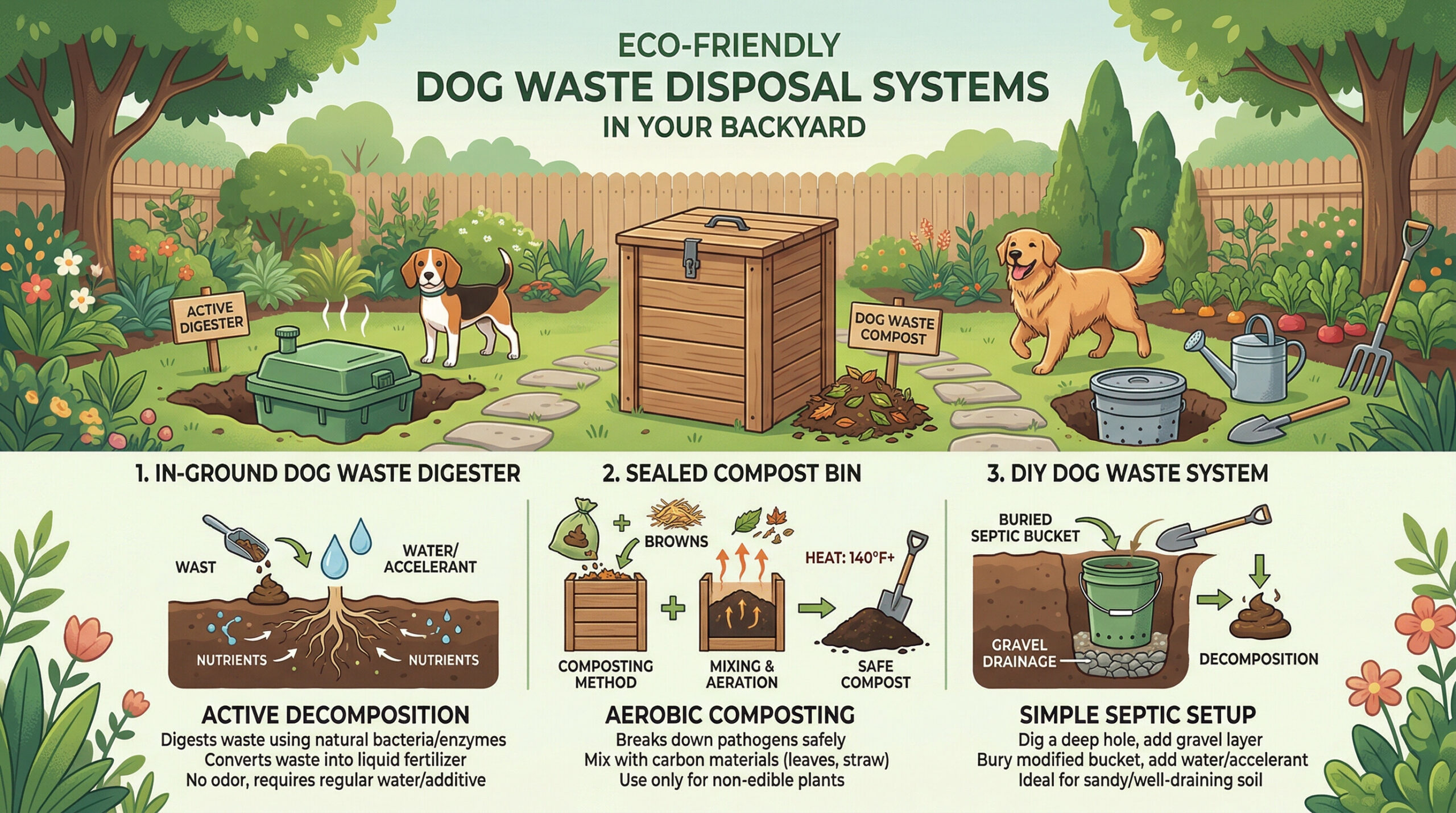
A Practical All-Round Option: Doggie Dooley In-Ground Dog Waste Disposal System
Quick take:
A purpose-built in-ground system designed specifically for dog waste, working like a mini septic tank.
Why it works well:
- Specifically made for pet waste
- Uses enzymes and bacteria to break waste down underground
- Very low maintenance once installed
Things to consider:
- Needs well-draining soil
- Installation required
Works well for:
Homeowners wanting a simple, proven, pet-safe solution
👉 Check availability via global retailers (widely shipped internationally)
A Strong Local Option: Beastie Bin Pet Waste Composter (New Zealand Made)
Quick take:
A New Zealand-designed system built specifically for pet waste disposal in backyard conditions.
Why it stands out:
- Designed for NZ climate and soil conditions
- Purpose-built for dog waste (not repurposed composting)
Works well for:
NZ audiences and eco-conscious buyers looking for a locally designed solution
👉 Check NZ eco retailers or supplier websites (some offer international shipping)
Works Well for Smaller Yards: Pet Waste Wizard BioBin Dog Waste Composter
Quick take:
A compact, enclosed system designed specifically to handle pet waste cleanly.
Why it works well:
- Fully enclosed for better hygiene
- Smaller footprint for tighter spaces
- Designed for pet waste breakdown
Things to consider:
- Needs more frequent emptying
- Slightly more hands-on than in-ground systems
Works well for:
Smaller properties or users wanting a contained, tidy solution
👉 Check availability through online retailers
A Discreet In-Ground Alternative: EnsoPet Pet Waste Composter
Quick take:
A more premium in-ground system designed for efficient breakdown and minimal visual impact.
Why it works well:
- Designed specifically for pet waste
- Durable and long-lasting
- Blends into garden environments
Things to consider:
- Higher upfront cost
- Still dependent on soil conditions
Works well for:
Homeowners wanting a clean-looking, long-term setup
A Low-Cost Option That Still Gets the Job Done: DIY Dog Waste System
Quick take:
A simple, purpose-built DIY setup that mimics in-ground digesters.
Why it works:
- Extremely budget-friendly
- Can be tailored to your yard
- Effective when done properly
Important:
This must be a dedicated pet waste system, not regular compost.
Works well for:
DIYers who want a functional solution without buying a system
👉 See your full DIY guide for safe setup
Why Some Composters Aren’t Included
You might see electric composters or kitchen compost bins mentioned elsewhere, but most are not designed for pet waste.
Using the wrong system can:
- Fail to break down harmful pathogens
- Create hygiene risks
- Damage the unit
That’s why every option above is specifically designed for dog waste disposal.
Quick Comparison
| System | Effort | Cost | Speed | Smell Control |
|---|---|---|---|---|
| In-Ground | Low | Medium | Slow | Good |
| NZ Natural System | Medium | Medium | Medium | Good |
| Compact Bin | Medium | Medium | Medium | Very Good |
| Bokashi | Medium | Medium | Fast (fermentation) | Excellent |
| Electric | Very Low | High | Fast | Excellent |
| DIY | Medium | Low | Slow | Variable |
How to Choose the Right Dog Waste System
Choosing the right system is less about “best overall” and more about best for your situation.
Large yard? Go in-ground.
Small space? Choose compact or bokashi.
More dogs = more waste = bigger system needed.
Wet climates can slow breakdown.
Bokashi systems shine here because they’re sealed.
If odour is your enemy, go sealed or bokashi.
Want zero fuss? In-ground or electric.
Okay with a process? Bokashi or DIY.
Mistakes to Avoid (Most People Get This Wrong)
A few common missteps can turn a good system into a backyard regret:
- Adding dog waste to regular compost
- Burying waste randomly
- Flushing it (bad for plumbing and waterways)
- Using systems not designed for pet waste
Think of dog waste like a “special category” material. It needs the right system to be handled safely.
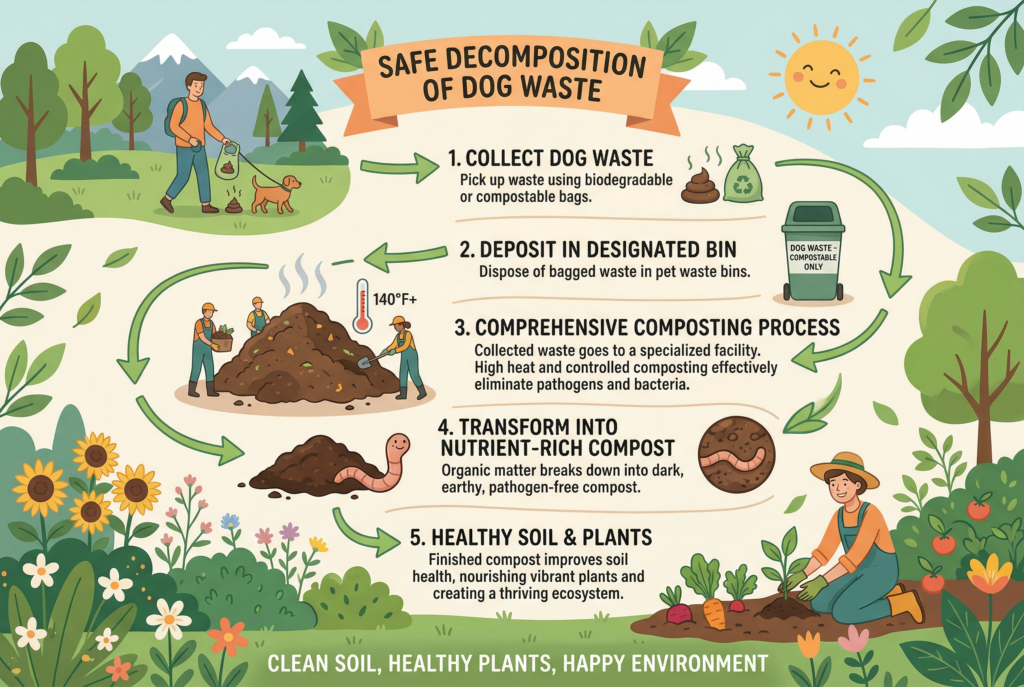
Are Dog Waste Systems Safe for the Environment?
Yes… when used correctly.
Proper systems:
- Contain harmful pathogens
- Break down waste safely
- Prevent runoff into waterways
The key is controlled decomposition, not casual disposal.
Handled properly, dog waste becomes far less of an environmental burden.
DIY Dog Waste Systems (Budget-Friendly Option)
If you’re going the DIY route, keep it simple and safe:
Basic idea:
- Dig a hole
- Add a container or pipe system
- Use enzymes or compost starter
- Keep it separate from food compost
👉 For a full step-by-step guide, check your dedicated DIY article
Frequently Asked Questions
Can you compost dog poop safely?
Yes, but only in a dedicated system designed for pet waste. Never mix it with regular compost used for food plants.
What is the easiest dog waste disposal method?
In-ground digesters are the easiest. Once installed, they require very little effort.
Do dog waste digesters smell?
When used correctly, they produce little to no odor.
Can I use a regular compost bin?
No. Dog waste requires a separate system due to harmful pathogens.
Is dog waste bad for soil?
Raw dog waste can harm soil and spread bacteria. Proper systems neutralize these risks.
Final Verdict: Which One Should You Choose?
If you want the simplest answer:
- Most hands-off option: In-ground digester
- Neatest setup for small yards: Compact system
- Most natural breakdown approach: NZ-designed composting system
- Fastest option for convenience: Electric unit
- Lowest upfront cost: DIY system
Quick Picks Summary
If you just want a fast decision:
- Backyard + low effort → Go in-ground
- Small space + low odour → Choose sealed or bokashi
- Speed + convenience → Electric
- Budget → DIY
Next Steps
If you want to go deeper
More Reading
- NZ safety guide to composting dog waste
- Bokashi system walkthrough
Bonus: What Most People Don’t Realize
The “best system” isn’t just about convenience.
It’s about:
- Reducing landfill waste
- Protecting waterways
- Creating a cleaner backyard ecosystem
It’s a small shift… but one that quietly compounds over time.