
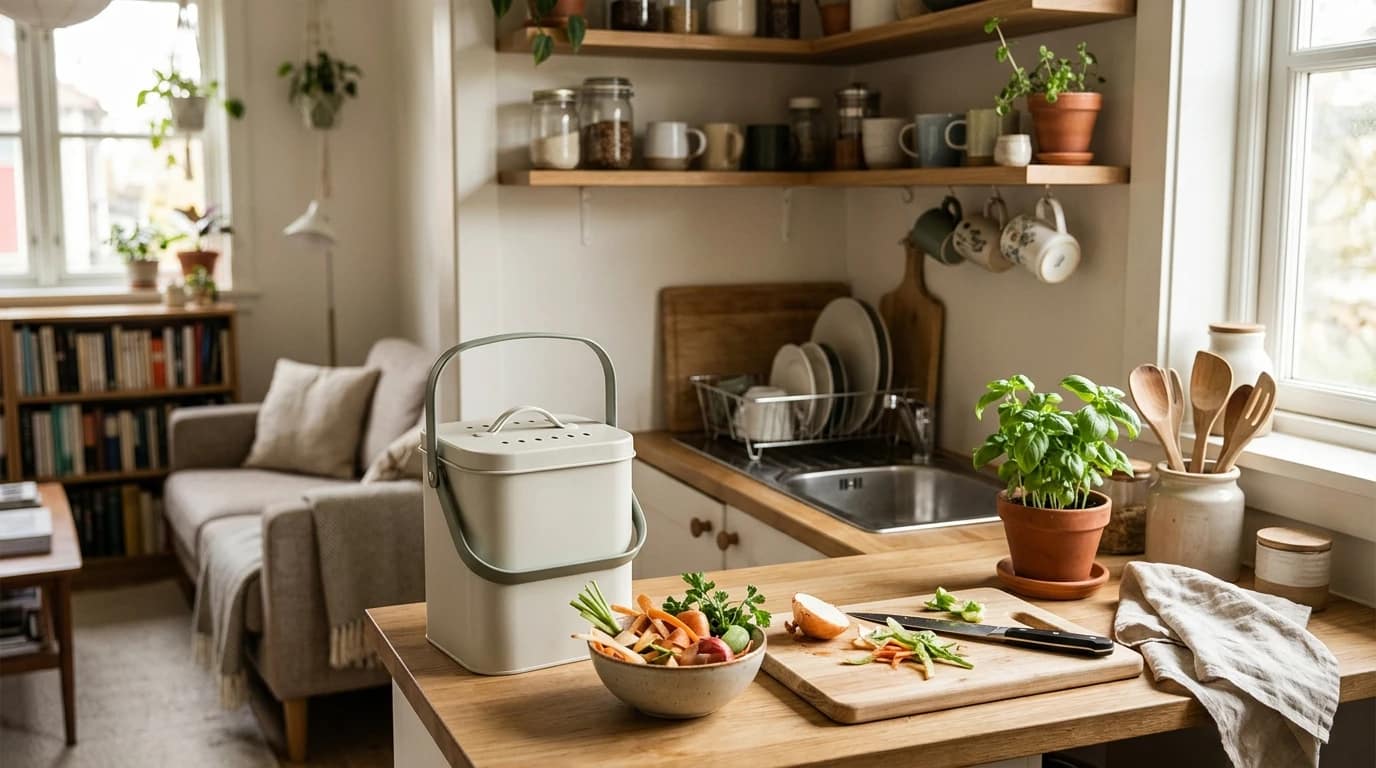
Most people assume composting in a small apartment means squeezing a full-size system into a space that was never designed for one. That’s backward. The method should fit the space, not the other way around and once you know what you’re actually working with, the right choice usually becomes obvious.
Why space is the real obstacle, not the know-how or commitment
Plenty of apartment dwellers understand composting perfectly well. They know what goes in, how often to add scraps and why it matters for reducing waste. What stops them isn’t knowledge. It’s a kitchen counter that’s already covered in dish racks and coffee makers, a lease that says no modifications and walls thin enough that a roommate hears every sound from the next room.
Most composting advice is written for houses with gardens, garages and spare rooms. It tells you to “find a spot” without acknowledging that in a one-bedroom apartment, there is no spare spot. That gap between generic advice and real living conditions is exactly why so many renters try composting once, give up and assume it’s not for them.
It is for them. They just need to start from the room they actually have, not the one the advice assumes they have.
Mapping your actual space before you choose anything
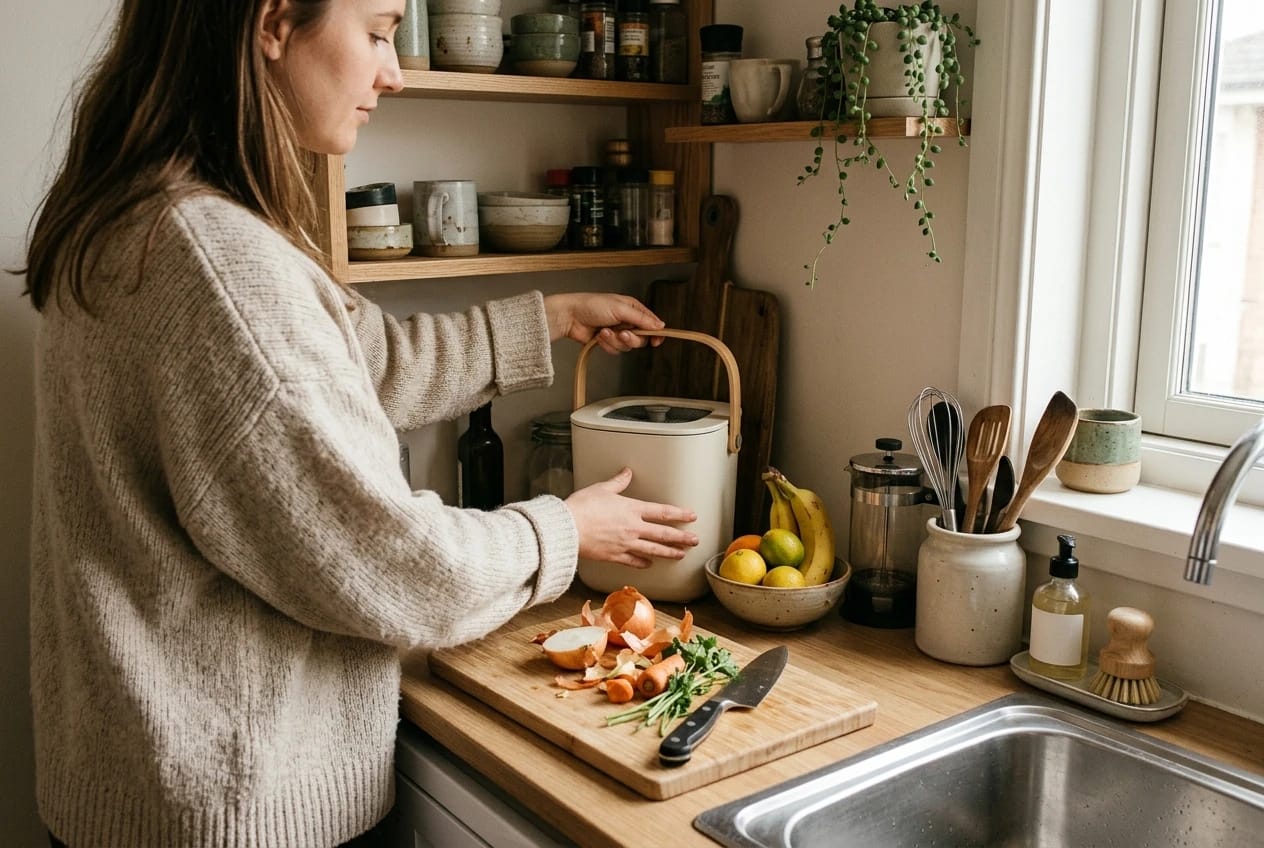
Before looking at any composter, walk through your kitchen and the rest of your apartment and take honest stock of what’s available. This sounds basic, but it changes everything downstream.
Consider these zones:
- Countertop: Even a few inches next to the sink can hold a small bin or electric unit. If you have zero free counter space, cross this off and move on without guilt.
- Under-sink: Often the most underused space in a small kitchen. A bokashi bucket or a compact bin fits here if the cabinet isn’t already packed with cleaning supplies.
- Closet or pantry shelf: A sealed system like bokashi doesn’t need to breathe, so it can sit in a closet for its fermentation period without causing problems.
- Hallway or entryway: Some renters keep a bin by the door for easy carrying out to a drop-off point or shared bin.
- Genuinely nothing spare: This is more common than people admit and it rules out bulkier countertop electric units but doesn’t rule out composting altogether.
Once you know which of these describes your home, the choice between systems stops being about features and starts being about fit.
Bokashi, electric composters and worm bins compared for cramped kitchens
These three methods get compared constantly, but rarely in terms of what a cramped kitchen can actually tolerate.
Bokashi uses a sealed bucket and a bran inoculated with microbes to ferment food waste, including small amounts of meat and dairy that most other methods can’t handle. It takes up roughly the footprint of a kitchen bin, doesn’t need electricity and produces no odour if sealed properly. The catch is that it’s a two-stage process: ferment for a couple of weeks, then bury or finish the material somewhere, which means you still need somewhere to send the end product. If you have access to a community garden, a friend with a garden, or a local drop-off, bokashi is one of the most space-efficient options going. Our guide to what bokashi composting is and how it works covers the process in more depth.
Electric composters are the countertop units that dry and grind food waste into a soil-like output, often within a day. They’re genuinely good for small kitchens because they need no separate curing space and produce a finished product fast. The tradeoff is that they need counter space, a power outlet and a bit of ventilation, so they’re a poor fit if your counter is already full or your kitchen is shared. For a closer look at how these machines actually work, see Electric Composters Explained.
Worm bins (vermicomposting) need a stable spot somewhere between 15 and 25 degrees Celsius, away from direct sun and vibration and most people underestimate how particular worms are about disturbance. A worm bin can sit in a closet or under a bench, but it’s not something you want to shift around weekly, which makes it a poor match for frequent movers or households without a consistently quiet spot. It also asks more ongoing attention than the other two, which matters if your schedule is unpredictable.
None of these is “better” in the abstract. Bokashi wins on footprint and what it can accept. Electric composters win on speed and odour control at the cost of counter space. Worm bins win on finished compost quality but need a stable, undisturbed home.
Composting when you rent or share a kitchen with roommates
Shared kitchens add a layer that solo apartments don’t have: other people’s tolerance and other people’s stuff on the counter.
A few things make shared living easier:
- Claim a fixed, small spot rather than letting your bin migrate around the kitchen. Roommates are far more accepting of composting when it has a defined, out-of-the-way place.
- Choose sealed systems over open ones. Bokashi buckets and most electric composters are sealed or near-sealed, which matters enormously when you’re not the only person smelling the kitchen. If smell has already caused friction, our piece on why indoor composters smell and how to fix it is worth reading before you choose a method, not after.
- Talk to your landlord before assuming no. Composting doesn’t modify the unit the way painting or drilling does. Most leases that ban alterations aren’t talking about a bucket under the sink.
- Agree on what goes in, if roommates are also using it. A shared bokashi bucket filling up faster than expected is a common source of friction and it’s avoidable with a quick conversation upfront.
What to do when there’s genuinely no indoor space to spare
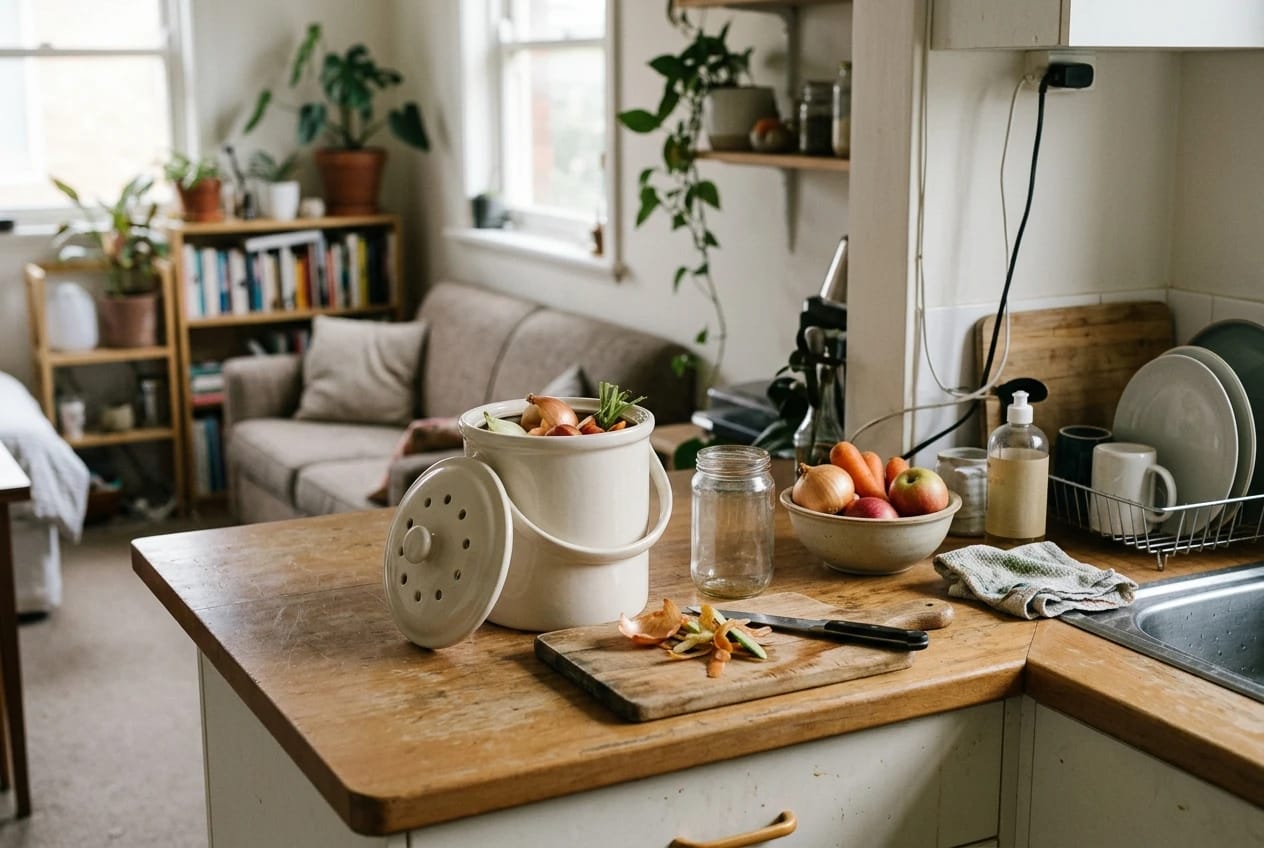
Some apartments really do have nothing free: no counter, no under-sink room, no closet shelf to give up. If that’s your situation, indoor composting in the traditional sense may not be realistic and that’s fine.
Options that don’t require giving up square footage in your home:
- Community compost drop-off points, which many cities now offer at farmers markets or municipal collection sites. You still collect scraps in a small countertop container, but it only needs to hold a day or two of waste before you empty it.
- Council or curbside organics collection, where available, which removes the need for any composting equipment in your home at all.
- A shared building compost bin, if your apartment complex has outdoor space and other residents are interested in setting one up.
None of these require a composter of your own. They require a small catch-container, something many people already have in the form of a lidded bowl or small bin and a short walk every few days.
Matching the system to your routine, not just your space
Space is the first filter, but your routine and budget narrow it further.
Busy, unpredictable schedules suit bokashi well, because fermentation happens on its own timeline and doesn’t demand daily attention, only that you seal the bucket properly and press out air each time you add scraps. Electric composters also suit busy people since most run unattended cycles, though they ask you to empty and clean the unit regularly, which is a task that’s easy to forget.
Tight budgets generally favour bokashi, since starter kits and bran are inexpensive compared to electric units and the ongoing cost is just replacement bran. Worm bins also have a low ongoing cost once set up, since worms self-sustain if fed appropriately.
Pet owners have an extra consideration: most standard kitchen composters, bokashi included, aren’t designed for pet waste and mixing it in isn’t recommended. If you’re managing dog waste alongside food scraps, that’s a separate system entirely and our guide on what can and can’t be composted with pet waste explains why the two streams need to stay apart.
People wary of bugs or mess often do better with electric composters, since the sealed, heated process avoids the fruit flies that can occasionally show up around open bins or poorly managed bokashi buckets.
Choosing your first setup without overbuying
It’s tempting, once you’ve decided composting is worth doing, to buy the biggest or most feature-packed unit available. For a small apartment, that’s usually the wrong move. A unit sized for a family of five sitting on a counter meant for one or two people creates exactly the friction that made composting feel impossible in the first place.
Start by matching capacity to how much food waste your household actually produces in a few days, not a theoretical maximum. A smaller unit that fits your counter and gets used daily will outperform a larger one that’s awkward to access and quietly gets ignored.
If you’re still deciding between a bokashi setup, an electric composter and a worm bin, it helps to see specific models side by side rather than choosing on method alone. Our guide to the best indoor composters for apartments, small kitchens and eco-friendly homes compares real options against the kind of space constraints covered here, so you can pick a setup that fits your apartment rather than one you have to make room for.