
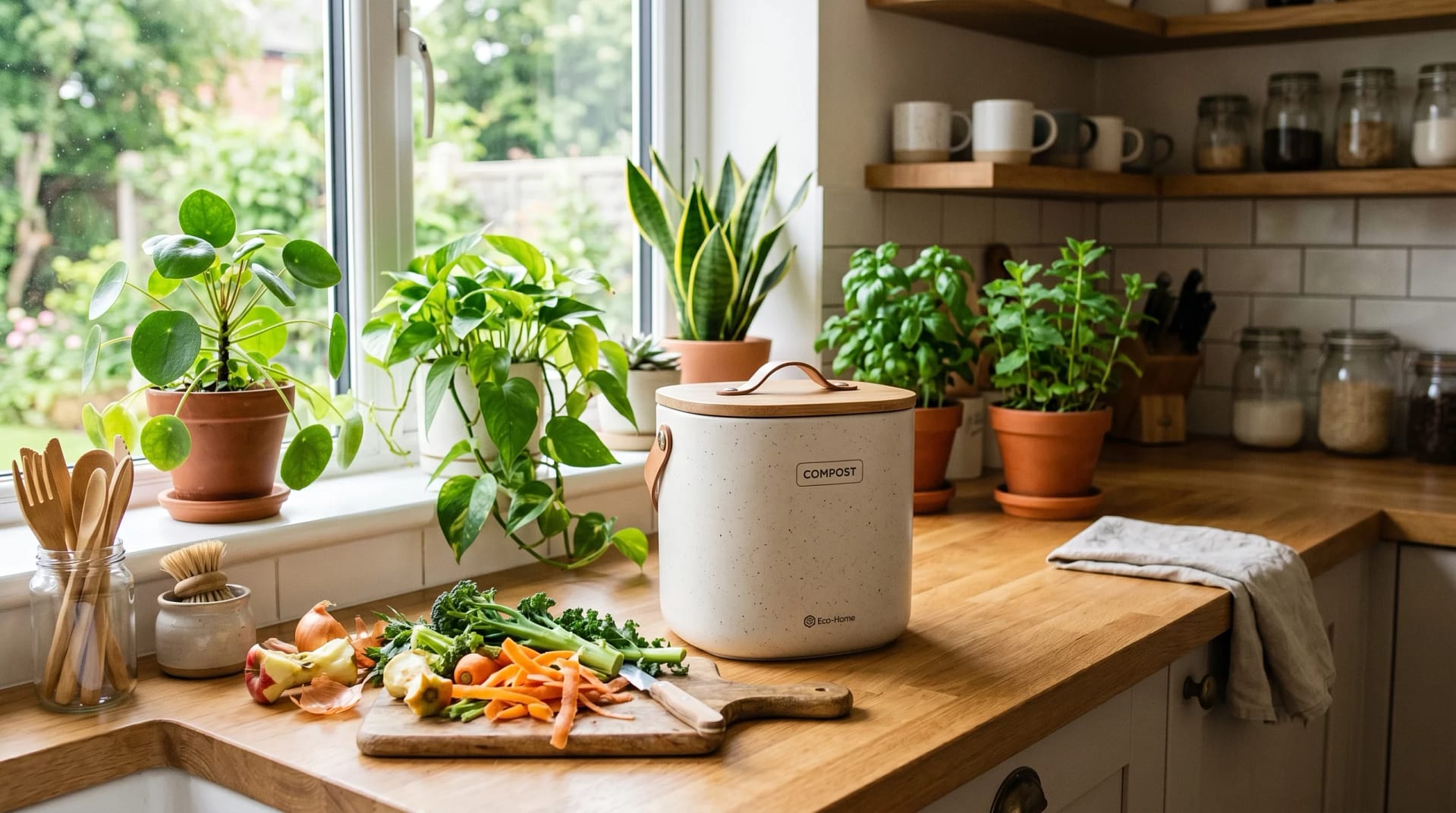
Banana peels, coffee grounds, limp spinach hiding in the back of the fridge… kitchen waste has a sneaky way of piling up like a tiny compostable mountain range. The good news? Indoor composters have evolved far beyond the old “bucket under the sink” era. Today’s models are quieter, cleaner, smarter and surprisingly stylish. Some even look like futuristic bread makers that moonlight as sustainability ninjas.
TL;DR: Best Indoor Composters
- Best Overall: Lomi
- Best Premium Option: Reencle Prime
- Best for Families: FoodCycler Eco 5
- Best Budget Option: Bokashi Bin
- Best Natural Composting: Worm Bin Systems
Indoor composters reduce kitchen waste, control odours and make sustainable living easier even in apartments or small homes. Electric composters are best for convenience, while Bokashi and worm systems are ideal for eco-focused households wanting more traditional composting.
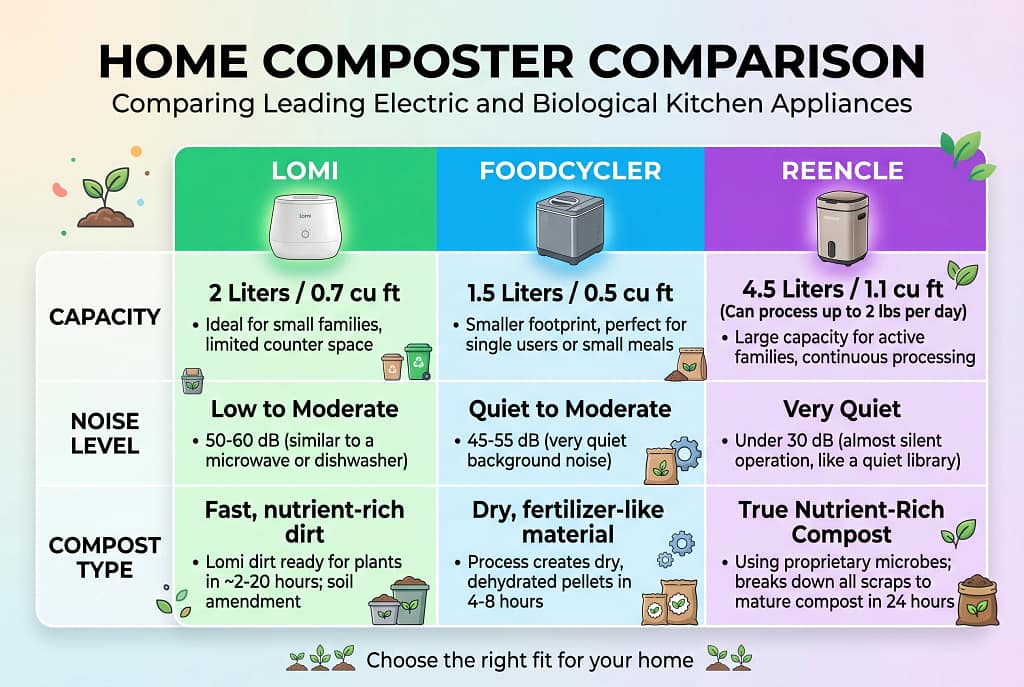
The best indoor composters help reduce food waste, control odours and make composting practical even in apartments or homes without gardens. But not all systems work the same way. Some create dehydrated food material that still needs curing, while others use microbes to create a more compost-like end product. (Forbes)
New Zealand readers may also want to explore our roundup of the best composters available in NZ, including locally available electric and Bokashi systems.
In this guide, we’ll cover:
- The best indoor composters for different lifestyles
- Electric vs non-electric composting systems
- What actually works in real kitchens
- Common mistakes to avoid
- Buying tips for beginners
- SEO-friendly FAQs and schema-ready sections
Quick Comparison: Best Indoor Composters
| Composter | Best For | Compost Type | Capacity | Odour Control | Noise Level |
|---|---|---|---|---|---|
| Lomi | Beginners & convenience | Dehydrated soil amendment | Medium | Excellent | Moderate |
| Reencle Prime | True composting | Microbe-based compost | Large | Excellent | Very quiet |
| FoodCycler Eco 5 | Families | Dried food material | Large | Excellent | Quiet |
| Bokashi Bin | Budget composting | Fermented scraps | Medium | Good | Silent |
| Worm Bin | Eco enthusiasts | True vermicompost | Medium | Good when maintained | Silent |
Best Overall Indoor Composter: Lomi
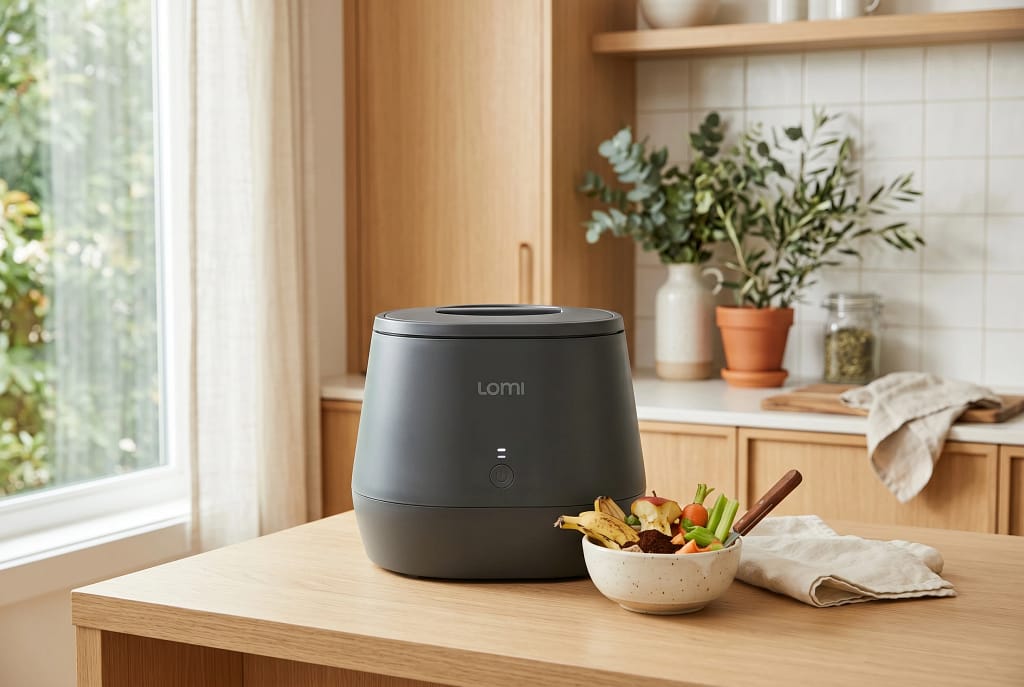
If indoor composters had a “friendly neighbour who somehow also owns a Tesla” personality, it would be Lomi.
Lomi became popular because it makes composting ridiculously approachable. Toss in food scraps, press a button and several hours later you’re left with dry, broken-down material that can be added to soil or outdoor compost systems.
- Simple setup
- Modern countertop design
- Multiple composting modes
- Handles many food scraps easily
- Excellent odor filtering
According to recent reviews, Lomi consistently ranks among the best smart kitchen composters because of its ease of use and reliable odour control. (Best in 2026)
- Beginner-friendly
- Reduces food waste volume dramatically
- Fits well in apartments
- Helps reduce landfill waste
- Not technically “finished compost”
- Replacement filters add ongoing costs
- Can struggle with large households
Apartment dwellers, eco-conscious beginners, and busy households wanting a low-effort composting system.
Best Premium Indoor Composter: Reencle Prime
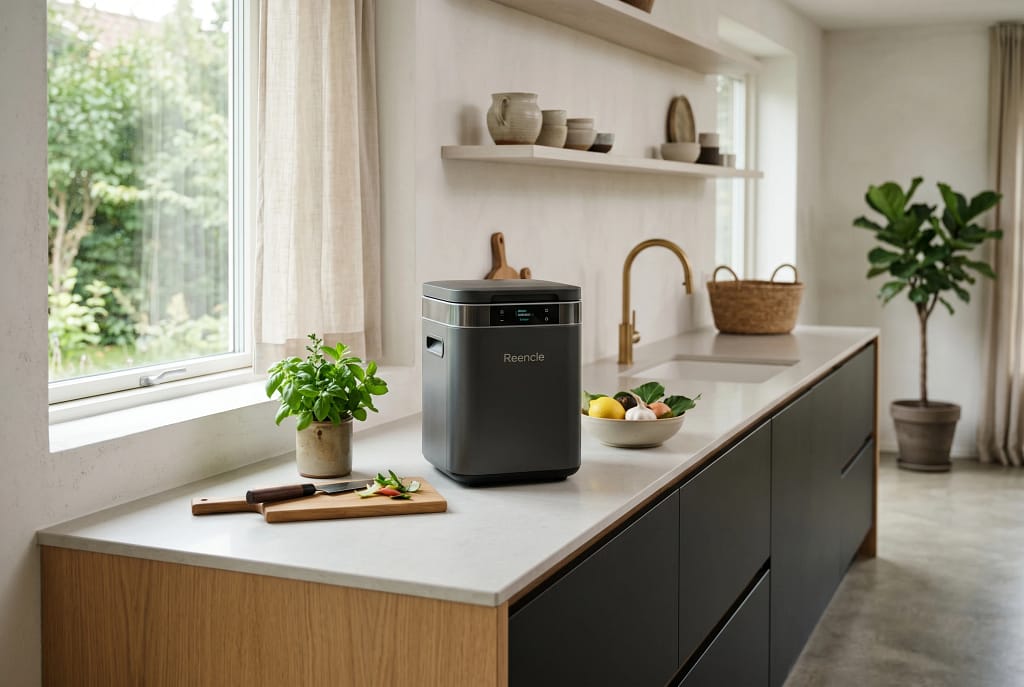
The Reencle Prime approaches composting differently. Instead of mainly drying food scraps, it uses microorganisms to break waste down continuously.
Translation? More “real composting,” less “food dehydrator with eco ambitions.”
Many reviewers praise the Reencle for producing a more compost-like material compared to typical electric countertop composters. (Forbes)
- Continuous composting system
- Extremely quiet operation
- Minimal smell
- Produces nutrient-rich material
- No daily cycle management
The microbial system requires balance. Overfeeding or adding too much liquid can upset the compost environment. Some users also mention needing a short adjustment period while the microbes establish themselves. (Best in 2026)
Serious composters, gardeners, and households producing regular food waste.
Best Indoor Composter for Families: FoodCycler Eco 5
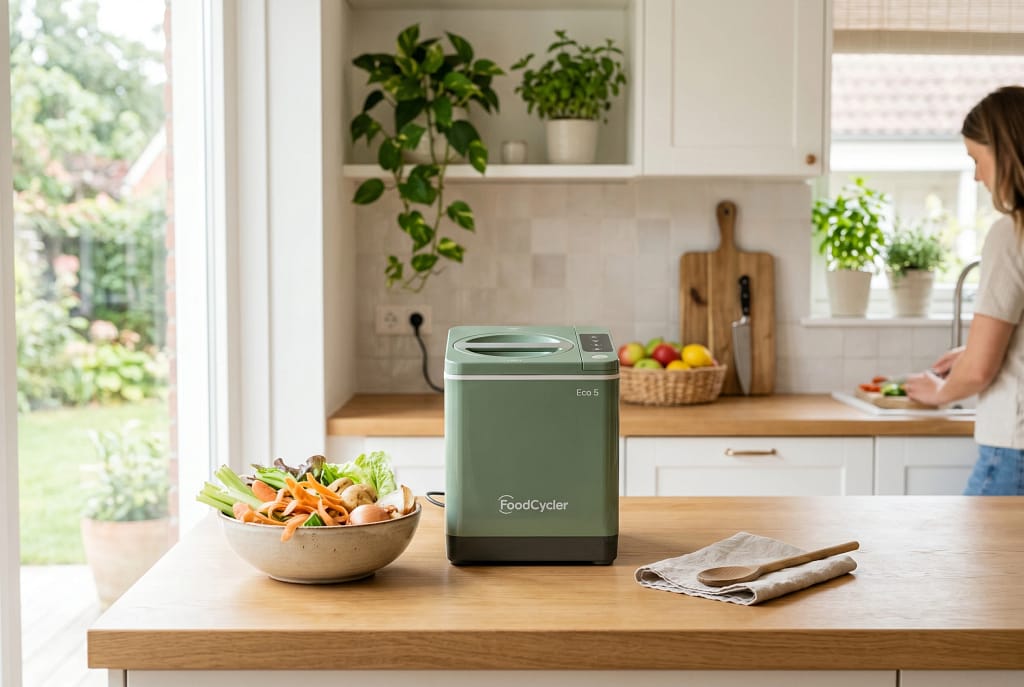
The FoodCycler Eco 5 is built for people whose kitchen somehow generates enough vegetable scraps to qualify as its own ecosystem.
This machine focuses on speed and volume reduction. It dries and grinds food scraps into a lightweight material that’s easier to store, transport or add to outdoor compost.
Recent testing highlighted its reliability, quiet overnight cycles and large capacity. (Ease The Grind)
- Large 5L capacity
- Great for families
- Strong odour filtration
- Stainless steel bucket
- Reliable long-term use
- Uses electricity
- End product still benefits from curing
- Larger countertop footprint
Families, meal preppers, and households with heavy daily food waste.
Best Budget Indoor Composting Option: Bokashi Bins
Not every great composting setup needs blinking lights and smartphone connectivity.
Bokashi bins are wonderfully simple. They ferment food scraps using beneficial microbes rather than traditional composting. The result is pre-compost material that breaks down rapidly once buried or added to soil systems.
They’re compact, affordable and ideal for beginners wanting a low-tech system. (CompostPulse)
- Affordable
- Silent
- Compact
- Handles cooked foods better than many systems
- Minimal electricity use
- Requires Bokashi bran
- Needs secondary composting stage
- Learning curve for liquids and draining
Budget-conscious households and people wanting eco-friendly composting without expensive appliances.
What Indoor Composters Actually Do
Here’s the important truth many ads skip over:
Most electric indoor composters do not create fully finished compost on their own. Instead, they typically grind, heat and dehydrate food waste into a dry material that breaks down faster later. (Forbes)
That doesn’t make them useless. Far from it.
Indoor composters still:
- Reduce food waste dramatically
- Cut odours from kitchen scraps
- Keep waste out of landfill
- Reduce methane-producing organic waste
- Create useful soil amendment material
Think of many electric composters as “food waste accelerators” rather than magical instant-soil machines.
Electric vs Non-Electric Indoor Composters
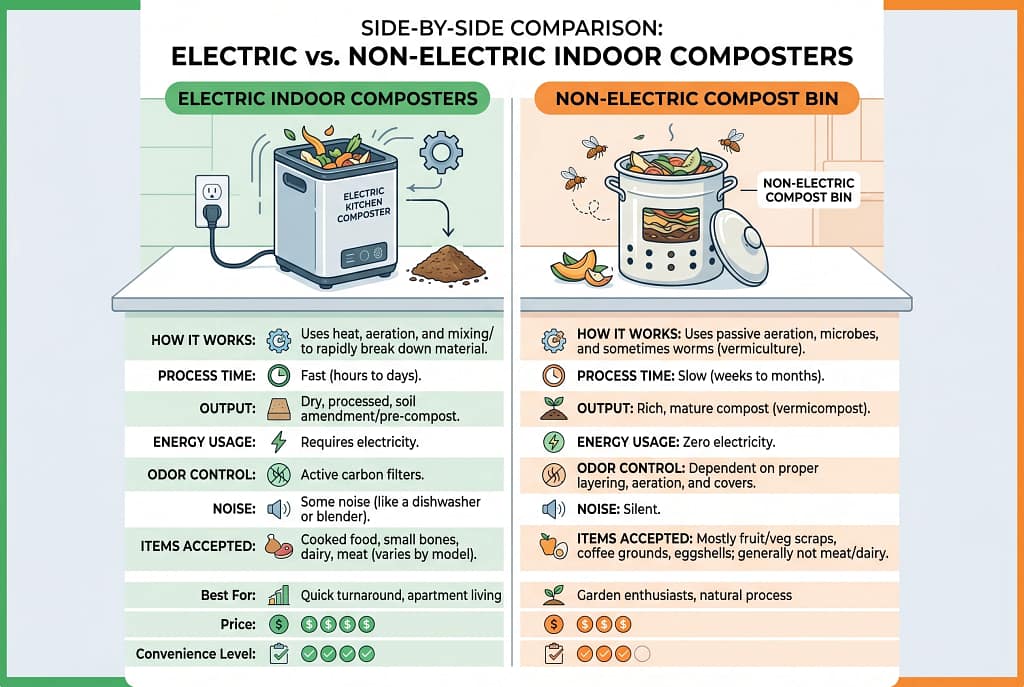
Electric Composters
These machines use heat, grinding, airflow, and filters to process food waste quickly.
- Busy households
- Apartment living
- Convenience-focused users
- People worried about smell
- Higher upfront cost
- Electricity usage
- Filter replacements
Read more: Electric Composters Explained: How They Work, Pros, Cons & Are They Worth It?
Non-Electric Composters
This includes Bokashi bins and worm farms.
- Sustainability purists
- Budget setups
- People wanting true compost
- Slower process
- More hands-on management
- Requires learning balance
Features to Look For in an Indoor Composter
A good indoor composter should smell earthy at worst, not like a forgotten science experiment.
Carbon filters and proper airflow matter enormously.
Tiny units work well for singles or couples. Families should look for larger systems like the FoodCycler Eco 5 or Reencle.
Some electric composters hum quietly overnight. Others sound like a blender having existential doubts.
Check reviews carefully if noise matters.
Removable buckets and dishwasher-safe components make life dramatically easier.
Electric composters use varying amounts of power. Frequent daily cycles can increase running costs over time.
Are Indoor Composters Worth It?
For many households, yes.
Reddit discussions and long-term owner reviews often point to three main benefits:
- Less household garbage
- Fewer food smells and pests
- Easier sustainable living habits (Reddit)
The biggest downside is cost. Premium electric composters are expensive and some users find smaller units insufficient for large families. (Reddit)
Still, for apartment dwellers or anyone without outdoor compost access, indoor composters can turn sustainability from “someday project” into daily routine.
Read more: Step-by-Step Guide to Using a Compact Kitchen Composter
Common Indoor Composting Mistakes
Indoor composters are not black holes for leftovers. Large quantities can overwhelm microbial systems or extend cycle times.
Soups, oils, and watery scraps can create odour and imbalance.
Filters, cleaning cycles, and bucket maintenance matter more than many people realize.
Most electric systems create pre-compost material rather than fully cured compost.
New Zealand readers may also want to explore our roundup of the best composters available in NZ, including locally available electric and Bokashi systems.
Final Verdict
The best indoor composter depends less on flashy marketing and more on your lifestyle.
- Want simplicity? Go with Lomi.
- Want a more natural composting process? Reencle Prime stands out.
- Need capacity for a busy household? FoodCycler Eco 5 is a powerhouse.
- Want low-cost composting? Bokashi systems are incredibly effective.
The biggest win isn’t perfect compost. It’s building a habit that keeps food waste out of landfill and turns everyday scraps into something useful instead of disposable. Tiny peels. Smaller trash bags. A quieter footprint on the planet.
Frequently Asked Questions
Most quality indoor composters use carbon filters or microbial systems to reduce odours significantly. Poor maintenance or excess moisture usually causes smell issues.
Some electric composters and Bokashi systems can process meat and dairy in small amounts. Traditional worm bins usually cannot.
Yes. Compact electric composters and Bokashi bins are especially popular for apartment living because they control smell and reduce food waste volume.
Most create dehydrated food material or soil amendment rather than fully finished compost. Some microbial systems like Reencle come closer to true composting. (Forbes)
Lomi is often considered the easiest beginner-friendly option because of its simple operation and strong odour control. (Best in 2026)
Recommended Products
| Product | Best Feature | Product Link |
|---|---|---|
| Eco 5 Food Cycler | Large family capacity | Great for heavy food waste |
| Bokashi Starter Kit 15 Litre System & Compost-Zing | Budget-friendly composting | Excellent beginner option |
| OXO Good Grips Easy-Clean Compost Bin | Countertop scrap storage | Easy-clean design |
| simplehuman Compost Caddy, Detachable and Countertop Bin | Premium countertop bin | Stylish modern kitchens |
| Feature | Eco 5 Food Cycler | Bokashi Starter Kit 15 Litre System & Compost-Zing | OXO Good Grips Easy-Clean Compost Bin | simplehuman Compost Caddy, Detachable and Countertop Bin |
|---|---|---|---|---|
| Type | Electric | Bokashi fermentation | Countertop caddy | Countertop caddy |
| Best For | Families | Budget composting | Small kitchens | Modern kitchens |
| Electricity Needed | Yes | No | No | No |
| Odour Control | Excellent | Good | Good | Excellent |
| Compost Output | Pre-compost material | Fermented scraps | Storage only | Storage only |
Explore More Composting Guides
Brought to you by CompostPulse – from dog poop to banana peels, we make composting simple and safe.
Affiliate Disclosure: Some of the links in this post may be affiliate links. This means if you click on the link and make a purchase, I may earn a small commission – at no extra cost to you. Rest assured, I only recommend products or services I truly believe in and think you’ll find valuable. Thank you for supporting ecotiga.com and helping me continue to provide helpful content.