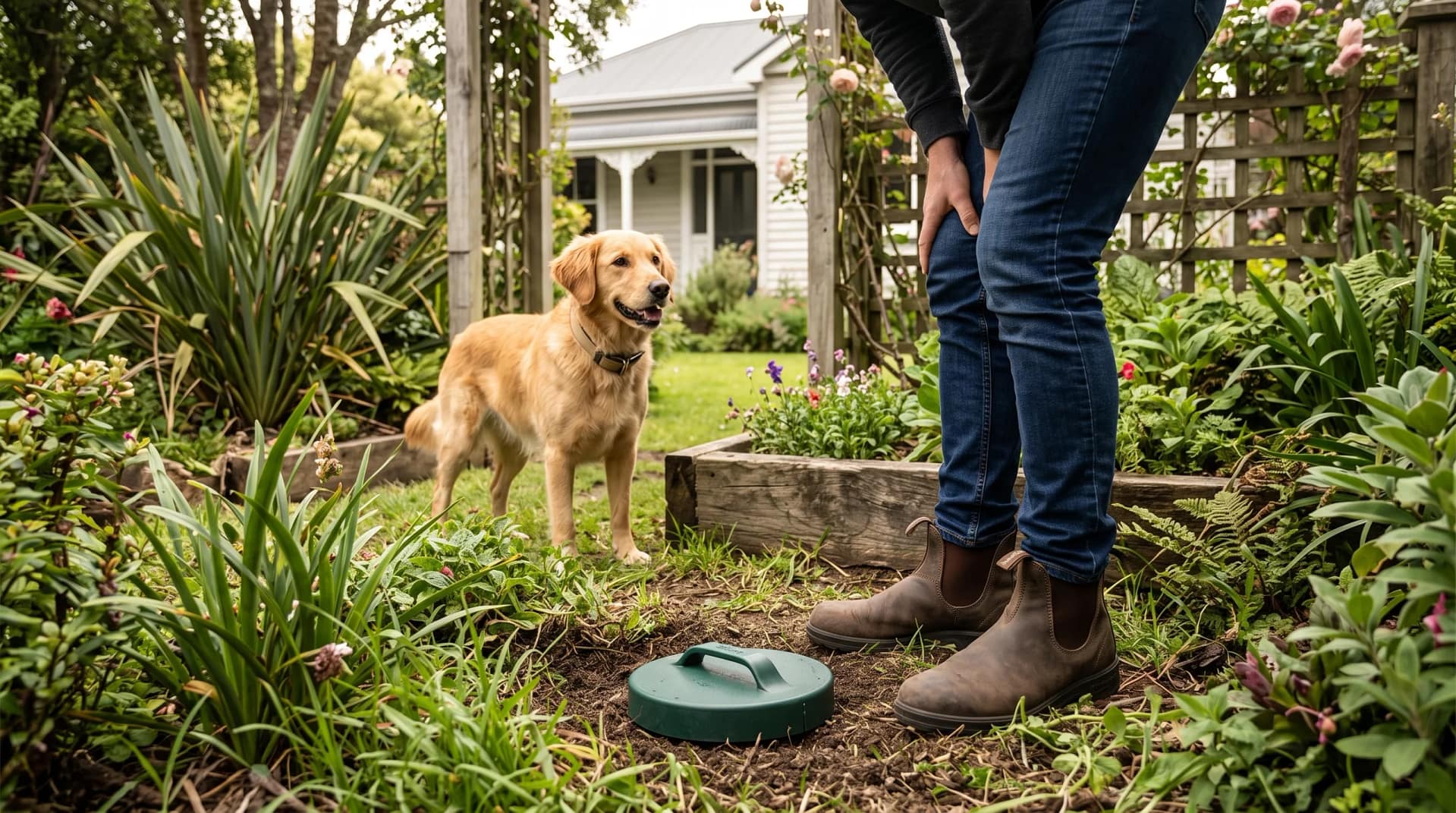
If you have a dog or cat, you already know how quickly pet waste can add up.
Putting it in the rubbish bin may seem like the only option, but pet waste composting offers another approach for some households. The important part is understanding what can go into a pet waste composting system, what shouldn’t and how pet waste composting differs from ordinary garden composting.
Not all pet waste is suitable for every composting method, and a normal backyard compost heap isn’t automatically suitable for pet waste.
So before adding anything to a pet waste composter, let’s look at what belongs there and what should stay out.
Quick Take: Pet waste can be managed through specially designed pet-waste composting systems, but you shouldn’t simply add dog or cat waste to a standard compost bin. What is suitable depends on the animal, the composting system and how the finished material will be handled.
What Is Pet Waste Composting?
Pet waste composting is the controlled breakdown of animal waste and suitable carbon-rich materials into a more stable organic material.
Unlike ordinary kitchen or garden composting, pet waste composting needs extra care because animal faeces can contain pathogens and parasites.
That’s why a dedicated pet waste composting system can be quite different from a regular household compost bin.
The aim isn’t simply to make the waste disappear. A suitable system needs to provide conditions that support decomposition while keeping the waste contained and reducing unnecessary contact with people, pets and edible crops.
What Pet Waste Can Be Composted?
The answer depends on the animal and the composting system you’re using.
Dog waste
Dog faeces are commonly the focus of dedicated pet-waste composting systems.
A system specifically designed for dog waste may accept:
- Dog faeces
- Suitable biodegradable material recommended by the manufacturer
- Some garden materials, depending on the system
- Water or moisture when required
- Carbon-rich materials where the system calls for them
However, don’t assume that dog waste belongs in your ordinary garden compost bin.
A dedicated pet-waste composting system is designed around the particular challenges of handling animal faeces.
If you’re considering a system for your dog, check its instructions before adding anything beyond the materials it specifically accepts.
Pet Waste Composting: Safe & Practical Solutions for Dog Owners
What About Cat Waste?
Cat waste needs a little more caution.
Cat faeces can contain pathogens and parasites, including Toxoplasma gondii. Cat litter can also contain materials that aren’t suitable for composting.
That means you shouldn’t simply empty a used cat litter tray into your garden compost.
Whether cat waste can be processed depends heavily on the type of litter and the composting system.
If you’re considering composting cat waste, check both:
- Whether the system is designed to accept cat waste.
- Whether the particular litter you’re using is accepted.
What about cat litter?
Cat litter isn’t automatically compostable just because it is marketed as biodegradable.
Some litters contain clay, silica or other materials that aren’t appropriate for composting.
Even plant-based or paper-based litter needs to be checked against the instructions for your particular system.
Biodegradable doesn’t automatically mean suitable for every composting system.
What Should NOT Go Into a Pet Waste Composter?
This is where a little caution can save a lot of trouble.
Unless your particular system specifically says otherwise, avoid adding:
Pet-waste composting systems aren’t designed for human sewage or nappies.
Don’t add unused medicines, flea treatments, worming products or other veterinary medicines to compost.
Dispose of medicines through the appropriate waste or veterinary disposal route instead.
Bleach, disinfectants, strong cleaners and other chemicals don’t belong in a composting system.
Plastic poo bags, plastic packaging and other conventional plastics shouldn’t be added.
This one catches people out.
A bag labelled biodegradable, compostable or plant-based isn’t necessarily suitable for your particular composting system.
Check what the system manufacturer recommends.
Clay, silica and other non-compostable litter should stay out unless the system specifically states that it can process it.
Avoid anything containing synthetic materials, chemicals or treatments that aren’t intended for composting.
What About Compostable Dog Poo Bags?
This is one of the most confusing parts of pet waste disposal.
A bag can be labelled compostable while still not being suitable for every composting setup.
There are different composting standards and conditions, and a product designed for an industrial composting facility may not break down properly in a backyard system.
So don’t rely on the word compostable alone.
Before adding a bag, check:
- What material it is made from
- What composting conditions it requires
- Whether it is intended for home composting
- Whether your pet waste system accepts it
- Whether the manufacturer specifically recommends using it
When in doubt, follow the instructions for your particular composting system.
What Other Materials Can Help?
Some pet waste composting systems require additional organic material to help create suitable conditions.
Depending on the system, this may include materials such as:
- Leaves
- Wood-based carbon materials
- Sawdust
- Wood chips
- Other carbon-rich organic matter
But again, the system’s instructions come first.
There’s no universal recipe for pet waste composting.
The right balance of moisture, oxygen, carbon-rich material and nitrogen-rich waste depends on the type of system you’re using.
Can You Put Pet Waste in a Normal Compost Bin?
Generally, you shouldn’t add dog or cat faeces to a normal household compost bin simply because it is organic material.
That’s an important distinction.
Composting isn’t just about whether something will eventually break down. It’s also about:
- What microorganisms may be present
- Whether the composting conditions are appropriate
- How much heat the system reaches
- How long the material remains in the system
- How the finished material will be used
A dedicated pet waste composting system is designed specifically around these considerations.
If your compost bin is primarily producing compost for your vegetable garden, keeping pet waste separate is the safer and simpler approach.
What About Using Pet-Waste Compost on the Garden?
This is another area where it’s important not to treat pet-waste compost like ordinary kitchen and garden compost.
The intended use of the finished material depends on the composting system and how it operates.
In particular, pet-waste compost shouldn’t automatically be treated as something to spread around edible crops.
Even after decomposition, you need to consider the possibility of pathogens and how the finished material will be handled.
For that reason, always follow the manufacturer’s directions for your particular pet-waste composting system.
A good rule of thumb
If the manufacturer doesn’t specifically recommend using the finished material around food crops, don’t assume that it is safe to do so.
What About Worm Farms?
Worm composting is brilliant for many kitchen scraps, but that doesn’t mean every worm farm is suitable for pet waste.
Some specialised systems are designed to process particular types of pet waste, while a standard household worm farm generally isn’t intended for dog or cat faeces.
So again, the system matters.
Don’t add pet waste to an ordinary worm farm unless it has been specifically designed or recommended for that purpose.
Pet Waste Composting Safety Tips
If you’re using a dedicated pet waste composting system, a few simple habits can make handling easier.
1. Wash your hands
Wash your hands thoroughly after handling pet waste, composting material or the composting system.
2. Keep children away from the waste
Pet waste composting systems should be positioned where children can’t easily access them.
3. Keep pets from disturbing the system
A curious dog can turn a tidy system into a rather unpleasant excavation project.
4. Use dedicated tools
If you’re using tools to handle pet waste composting material, keep them separate from tools used for harvesting vegetables or other food crops.
5. Follow the manufacturer’s instructions
This is especially important for:
- Accepted waste
- Moisture
- Carbon materials
- Maintenance
- Emptying
- Finished compost
- Recommended uses
Use Our Pet Waste Compost Checker
Not sure whether a particular item can go into your pet waste composting system?
That’s exactly why we created the Pet Waste Compost Checker.
Before throwing something into the system, check whether it belongs there rather than relying on assumptions.
It’s particularly useful for those awkward items where the answer isn’t immediately obvious, such as pet litter, poo bags and other pet-related materials.
What About Other Compostable Materials?
If you’re checking kitchen scraps, packaging or everyday household items, our general Compostability Checker can help.
It covers a much broader range of materials and is useful when you’re standing in the kitchen wondering:
“Can this go in the compost?”
Try the Compostability Checker
Pet Waste Composting: A Simple Guide
Here’s the short version:
| Material | Compost? | Important note |
|---|---|---|
| Dog faeces | In suitable systems | Use a system designed for pet waste |
| Cat faeces | System dependent | Extra care is needed |
| Ordinary cat litter | Usually not | Check the litter and system |
| Compostable poo bags | Check first | Compostable doesn’t mean universally suitable |
| Plastic poo bags | No | Keep plastics out |
| Leaves | Often | Depends on the system |
| Sawdust/wood material | Often | Use only suitable untreated material |
| Human waste | No | Not for pet-waste systems |
| Pet medicines | No | Dispose appropriately |
| Cleaning chemicals | No | Keep chemicals out |
| Food scraps | System dependent | Follow system instructions |
The table is deliberately cautious because there isn’t one universal pet-waste composting method.
The Bottom Line
Pet waste composting can be a useful way to manage some animal waste, but it isn’t as simple as throwing pet poo into an ordinary compost bin.
The key is to use a system designed for the type of pet waste you’re dealing with, follow its instructions and keep unsuitable materials out.
Dog waste is commonly handled by dedicated pet-waste composting systems, while cat waste and cat litter require additional consideration. Compostable bags also need checking because not every compostable product is suitable for every composting environment.
When you’re unsure, check before you add it.
A little caution at the beginning can prevent a whole lot of unwanted surprises later.
Frequently Asked Questions
Can you compost dog poo?
Dog poo can be processed in some dedicated pet-waste composting systems. It should not simply be added to a standard household compost bin intended for garden or food-growing use.
Can you compost cat poo?
Some specialised systems may accept cat waste, but cat faeces require additional caution because they can contain pathogens and parasites. Check that your particular system is designed to accept cat waste.
Can compostable dog poo bags go in a composter?
Not necessarily. A bag labelled compostable may require specific composting conditions. Check both the bag manufacturer’s information and your composting system’s instructions.
Can you put dog poo in a normal compost bin?
It’s generally not recommended to add dog faeces to a normal household compost bin, particularly where the finished compost will be used around food crops.
Can pet waste compost be used on vegetables?
Don’t assume that pet-waste compost is suitable for edible crops. Follow the instructions for the particular composting system and its finished material.
Is cat litter compostable?
Some plant-based or paper-based litters may be compostable under certain conditions, but many common cat litters are not. Check the litter material and your composting system before adding it.
Can pet medicines go into compost?
No. Pet medicines and veterinary treatments shouldn’t be added to composting systems. Dispose of them through an appropriate disposal route.
What should I do if I’m unsure about an item?
Check the manufacturer’s instructions for your system or use the Pet Waste Compost Checker before adding it.