
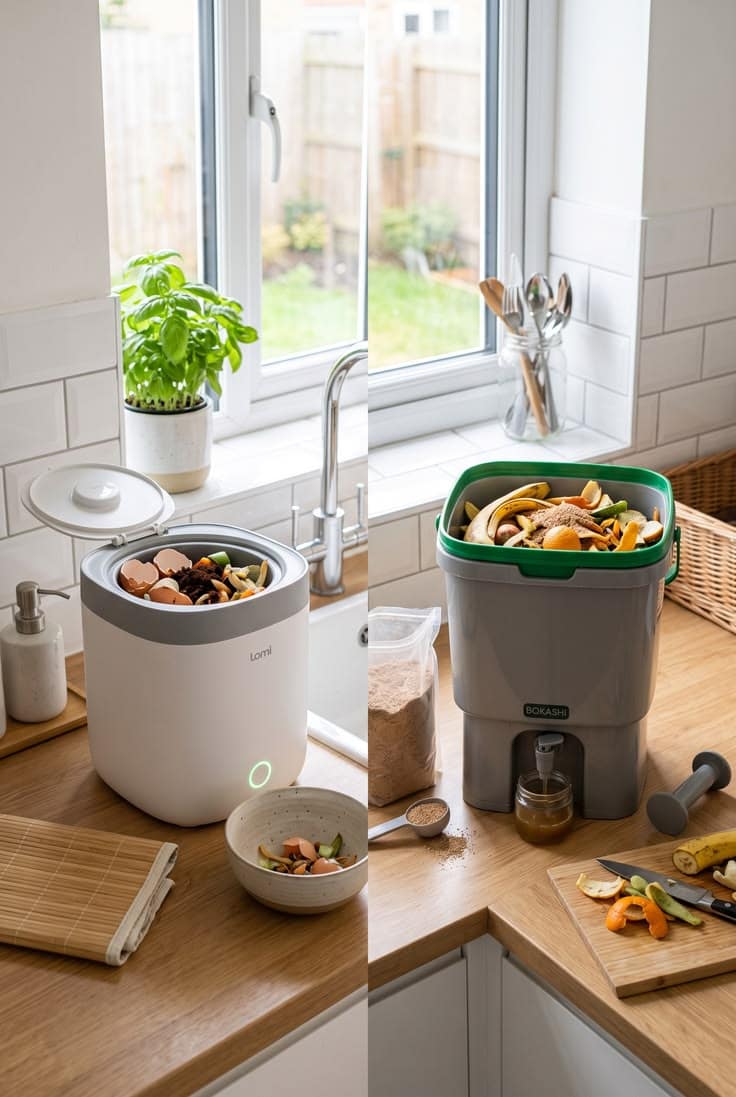
The Short Version: Who Each One Suits Best
Bokashi suits you if you want a low-cost, silent system, you have somewhere to put the output (a garden bed, a compost heap, a large planter or a friend’s garden) and you don’t mind a small daily routine. Electric composters suit you if you want to drop scraps in and press a button, you have a power socket and some counter or floor space and you’d rather not handle fermenting buckets or liquid.
Neither one gives you finished compost on the spot. Bokashi gives you fermented scraps that still need to be buried or added to a compost pile. Most electric composters give you a dry, reduced, partly broken-down material that is best mixed into soil or a compost bin before it goes near your plants. Both are a first stage and the question is which first stage fits your kitchen.
Here is how the two compare at a glance:
| Action | Bokashi | Electric composter |
|---|---|---|
| Daily effort | Add scraps, sprinkle bran, press down | Add scraps, run a cycle |
| Power needed | None | Yes |
| Noise | Silent | Hums, whirs or grinds during a cycle |
| Main ongoing cost | Bran, plus a second bucket if you want a continuous system | Electricity, plus replacement filters on some models |
| Output | Fermented, pickled-looking scraps plus liquid | Dry or crumbly material, much smaller in volume |
| Needs a place for the output | Yes, soil or a compost heap | Helpful, though it stores more easily |
The rest of this article explains each row so you can decide for your own space and habits.
How Each One Handles Your Scraps (in plain English)
Bokashi: Fermenting in a Sealed Bucket
Bokashi does not rot food the way a compost heap does. You put scraps in an airtight bucket, sprinkle a layer of bokashi bran (a carrier such as wheat bran that has been inoculated with beneficial microbes), and press the scraps down to push out air. The microbes ferment the food in the absence of oxygen, much as sauerkraut or pickles are fermented.
The scraps don’t break down into soil in the bucket. They stay recognizable, a bit soft and pickled, and the bucket gives off a sour smell instead of a rotten one. The fermented material then has to go somewhere that finishes the job: buried in soil, or mixed into a compost heap, where the soil life breaks it down quickly.
If you want the full mechanics, our guide to what bokashi composting is and how it works covers the process in more detail.
Electric Composter: Heat, Mixing and Airflow in a Box
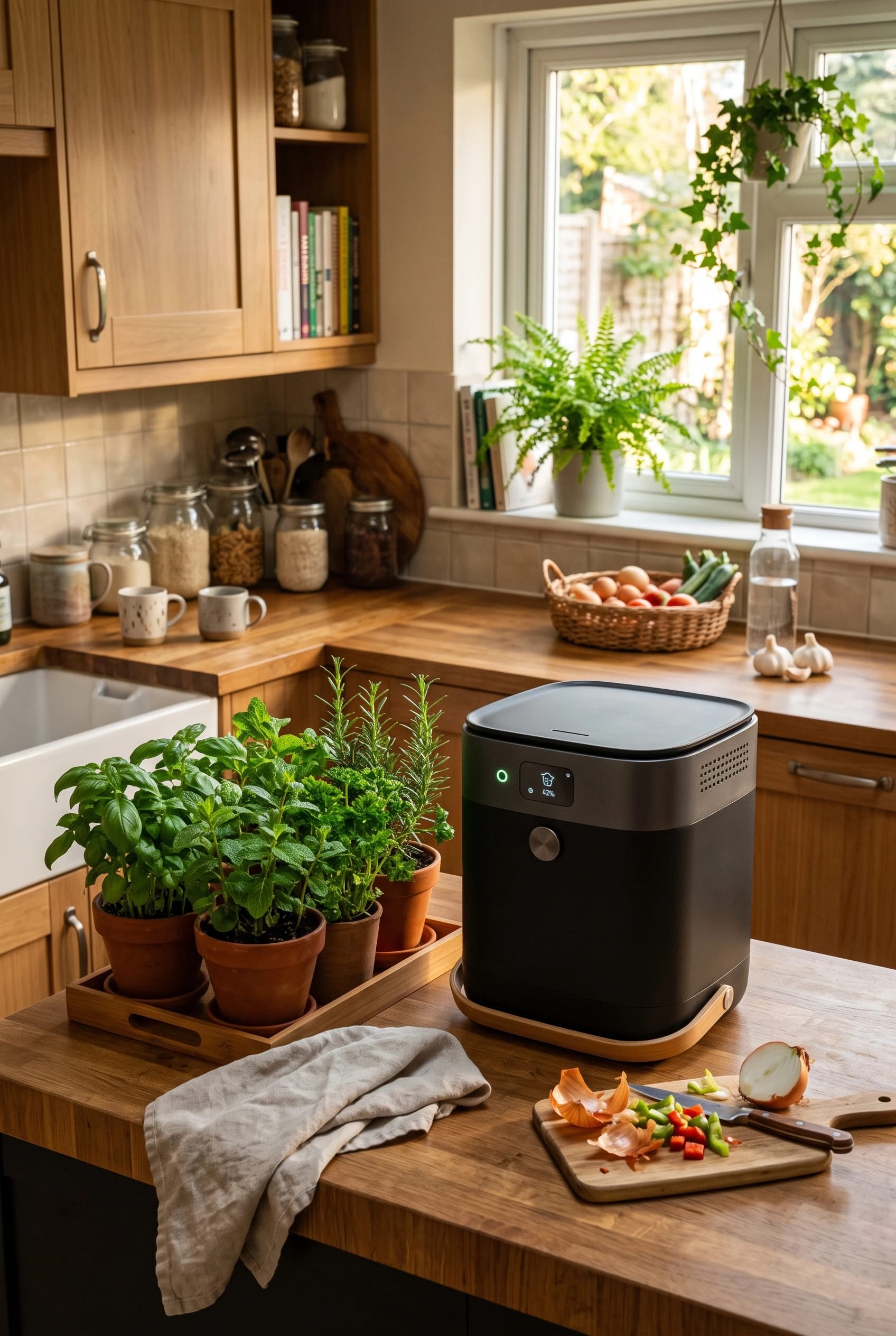
An electric composter (also sold as a food recycler or food waste digester) is a countertop or floor-standing appliance with a chamber that warms and stirs your scraps. Designs differ. Some mainly dry and grind food into a small amount of dry material. Others combine warmth, mixing and added microbes or bulking material to speed up decomposition, and take longer per cycle.
Because the designs differ, check what your chosen model actually does. “Electric composter” describes a category, and a dehydrating unit and a microbe-based unit behave differently in both cycle time and output. Our explainer on how electric composters work breaks the types down.
The common thread is that the appliance does the work of making scraps smaller and drier, and you don’t have to manage the process day to day.
Ease of Use: What a Normal Week Looks Like with Each
A Week with Bokashi
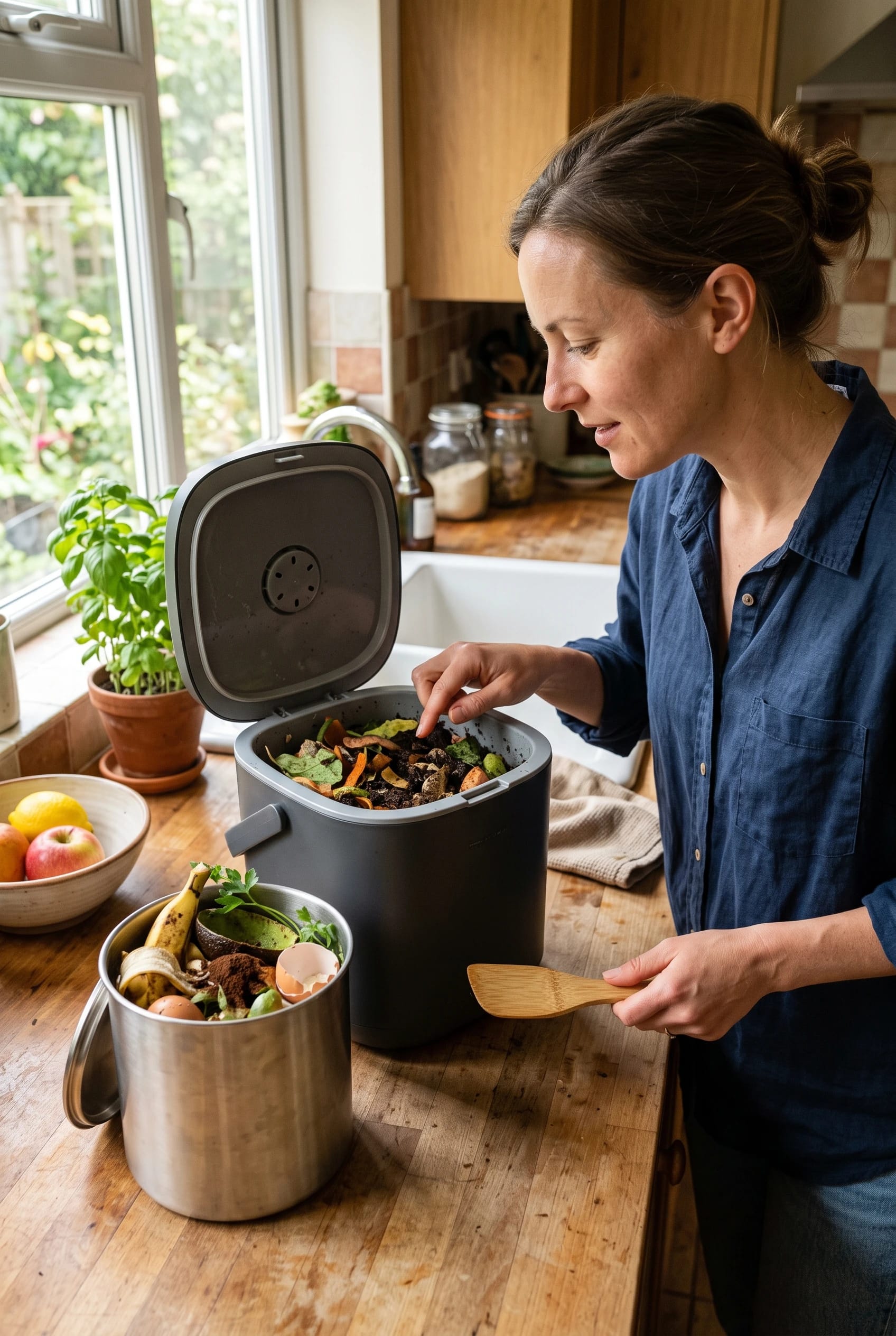
Each time you have scraps, you lift the lid, tip them in, sprinkle a thin layer of bran, press down firmly, and close the lid tight. That takes under a minute once you have the habit. Chopping larger scraps into smaller pieces helps them ferment evenly and packs the bucket better.
Two extra jobs come up through the week. Most buckets have a tap at the bottom, and you need to drain the liquid (often called bokashi tea or leachate) every few days so the scraps don’t sit in it. When the bucket is full, you seal it and leave it to ferment, usually around two weeks, though your bran’s instructions are the guide. During that time you need a second bucket for new scraps, otherwise you have nowhere to put them.
Then there’s the emptying. Digging a trench in a garden bed or tipping the bucket into a compost heap is a real task, and a good one to plan for before you buy. If the answer to “where does this go?” is “I’m not sure”, that matters more than anything else in this comparison.
A Week with an Electric Composter
You collect scraps and add them to the chamber, usually through a lid. Some people add a little at a time through the day and others store scraps in a caddy and run a batch. You press start and the machine runs its cycle. The length of a cycle varies a lot by model, so check the manual for the one you are considering.
There is less to remember, with no bran to buy, no liquid to drain and no second bucket. The tasks you do have are emptying the output when the chamber fills, wiping the chamber and lid, and replacing any filter on the schedule the maker recommends.
Both systems suit a routine, but they ask for different kinds of attention. Bokashi asks for a little attention every time you add scraps. An electric composter asks for less often and shifts the work to cleaning and emptying.
Smell: What to Expect and What Causes Trouble
Smell is the main worry for most people with a small kitchen, and both systems can smell if something goes wrong. Neither should smell bad when working properly.
Bokashi Smell
A healthy bokashi bucket smells sour and a bit like vinegar or pickles. You notice it when you open the lid, and it fades quickly once you close it again. Trouble starts when the smell turns rotten or putrid, and the usual causes are:
- Air getting in. A lid that doesn’t seal, or scraps that aren’t pressed down, lets the wrong microbes take over.
- Too little bran. Each layer of scraps needs its sprinkle.
- Too much liquid. Leaving the leachate in the bucket, or adding very wet scraps, leaves the food sitting in liquid.
- Spoiled food. Food that was already mouldy or rotten when it went in starts the bucket off badly. A little white fuzz on fermenting scraps is normal. Green, black or blue mould is a sign the batch has failed.
Opening the bucket after fermenting is when the smell is strongest, so many people do that outside or at the point of burying.
Electric Composter Smell
A working electric composter is generally designed to contain odour, and many models have a carbon filter or similar to catch what escapes during a cycle. You may notice a warm, food-like smell during or just after a run, particularly with strong foods such as fish, onions or cooked meat.
Problems usually come from a few sources:
- A filter past its replacement date. Filters stop working when they are saturated.
- Scraps sitting in the chamber too long between cycles, especially wet ones, in warm weather.
- A dirty chamber or lid seal. Residue builds up and starts to smell.
- Very wet loads that the machine struggles to dry.
If you are chasing a smell in an indoor system, our guide on why an indoor composter smells and how to fix it goes through the causes in order.
In both cases, smell is mostly about routine. A bokashi bucket with a good seal and a regular sprinkle of bran, and an electric composter with a fresh filter and a clean chamber, are rarely a problem.
What You End up With: Bokashi Pre-Compost vs Electric Composter Output
This is the section most buyers skip, and the one that most affects whether they stay happy a month later.
Bokashi Pre-Compost
At the end of fermentation you have scraps that look much like they did going in, pale, softened and pickled, with a sour smell. This is often called pre-compost. It is not ready for plants. The acidity and the unbroken-down food can harm roots, so it has to be mixed into soil or compost first.
The usual options are:
- Dig a trench or hole in a garden bed, tip it in, cover it with soil, and wait a few weeks before planting directly above it.
- Add it to a working compost heap or bin, where it breaks down faster than raw scraps.
- Mix it into a large container of soil or a dedicated “soil factory” bin to mature, if you have no garden.

You also have the bokashi liquid. Diluted well with water (follow the ratio your product gives) it is commonly used on garden plants and can be poured into drains. Undiluted, it is too strong for plants.
Electric Composter Output
The material that comes out is usually dry, crumbly and much smaller in volume than what went in. It tends to look like a dark, coarse soil or mulch, and it often smells earthy or mildly like cooked food. Because it looks like compost, it is tempting to treat it as finished.
Manufacturers differ in how they describe the output, and the honest description for most machines is a partly processed material, not matured compost. Many makers advise mixing it into soil or a compost bin and letting it settle before use with delicate plants, and it’s sensible to follow your model’s guidance. If your machine mainly dehydrates, the dried scraps will still have to decompose in soil.
An electric composter does have one advantage here: dry output stores easily. You can keep it in a bin or bag until you have a use for it, with less smell than fermented bokashi. If you live in an apartment and your outlet for the output is a friend’s garden or a community scheme, that matters.
Side by Side
Both give you something that needs a second step. Bokashi gives you a larger, wetter, more acidic product that must be buried or composted soon after fermenting. An electric composter gives you a smaller, drier product that is easier to hold on to and move. Neither means you can skip having somewhere for it to go.
Running Costs, Noise, Space and Ongoing Effort
I can’t give you exact prices, because they change by brand and by where you live, but the shape of the costs is the same everywhere.
Bokashi costs. The up-front cost is usually low: a bucket with a lid and tap. Bran is the recurring expense, and you use it with every layer, so a regular household will buy more over time. A second bucket adds to the starting cost but makes the routine run smoothly. There is no electricity use.
Electric composter costs. The up-front price is usually higher, since you are buying an appliance. Running costs include electricity, which depends on the model and how often you run it, and filters or other consumables where the model uses them. Check the manual and the maker’s listed consumables before you commit.
Noise. Bokashi is silent. Electric composters make noise during a cycle, anything from a quiet hum to a grinding or tumbling sound, and the level varies by model. If your kitchen opens onto where you sleep or work, think about when the machine will run. Many people run cycles when they are out or in the evening.
Space. A bokashi bucket is usually small enough to fit under a sink or in a cupboard, and a two-bucket system needs about double. An electric composter needs counter or floor space plus a power socket, and some models are bulky. Measure your space before ordering. Our guide to composting in a small apartment helps you think through fitting a method into limited room.
Ongoing effort. Bokashi has the smaller price tag but more hands-on tasks: sprinkling, pressing, draining, swapping buckets and burying. An electric composter costs more and takes less daily thought, though it still needs emptying and cleaning.
Which Foods and Households Each One Copes with Best
Foods
Bokashi is known for accepting a wider range of cooked and animal-based foods than a typical open compost heap, including small amounts of cooked meat, fish, dairy and leftovers, because fermentation in a sealed bucket suits them. It copes poorly with very wet food (drain soups and sauces first), food that is already mouldy or rotten and large quantities of liquid.
Electric composters generally accept mixed kitchen scraps including cooked food, fruit and vegetable waste, and often small amounts of meat and fish. Limits vary by model. Hard items such as large bones, shells and stones and very fatty or oily foods, are commonly restricted or discouraged and some manuals have a specific list of things to leave out. Always follow your own model’s list.
If you’re unsure whether a particular scrap suits either system, try our Compostability Checker before you add it.
Households
- Single person or couple with small amounts of waste: Either works. Bokashi buckets take a while to fill and an electric unit may sit mostly empty, so check the minimum load the machine suits.
- Family with a lot of daily scraps: A larger electric unit handles volume with little attention. Bokashi can work too, but you will fill buckets quickly and need a plan for emptying them regularly, so you may want two or more buckets and a decent garden.
- Renters and apartment dwellers without outdoor space: Bokashi is only practical if you can offload the output. An electric composter’s drier output is easier to store and give away.
- Keen gardeners: Bokashi’s output suits a garden you can dig in and the liquid is useful. A garden with a compost heap is the best home for it.
- People who dislike handling food waste: Electric composters involve less contact. Bokashi means pressing scraps by hand and handling the pre-compost at the end.
- Households sensitive to noise or electricity use: Bokashi.
Pick Your Match: A Quick Way to Decide
Answer these four questions in order.
1. Where will the output go?
If you have a garden bed to dig in or a compost heap, bokashi fits well. If you have no outdoor space and no one to give it to, an electric composter, whose output is easier to store, is the safer choice. If you have neither a use nor a plan, think hard before buying either.
2. How much daily effort will you actually keep up?
If a small ritual of sprinkling and pressing sounds fine, bokashi works. If you know you will forget, or the idea of a routine puts you off, an electric composter is more forgiving.
3. What matters more, up-front cost or convenience?
A low starting price and no electricity point to bokashi. Willingness to pay more for a hands-off process points to electric.
4. How much space, noise and smell can your kitchen take?
A silent bucket under the sink suits a small, quiet kitchen. A countertop machine with a socket and a cycle that hums suit a kitchen with space to spare. Remember that both smell only when something is going wrong.
Here is how the answers usually add up:
- Choose bokashi if you have a garden or a compost heap, like a low-cost start and can keep a small daily habit.
- Choose an electric composter if you want minimal daily effort, have a socket and space and want output you can store before using it.
- Wait and plan if you have neither a place for the output nor a routine in mind.
Whichever you pick, you are choosing the first stage of composting. Know where the second stage happens before the first bucket or cycle is finished and the choice becomes much easier.
Still undecided? Have a look at our guide to the best indoor composters or run a tricky scrap through our Compostability Checker.